
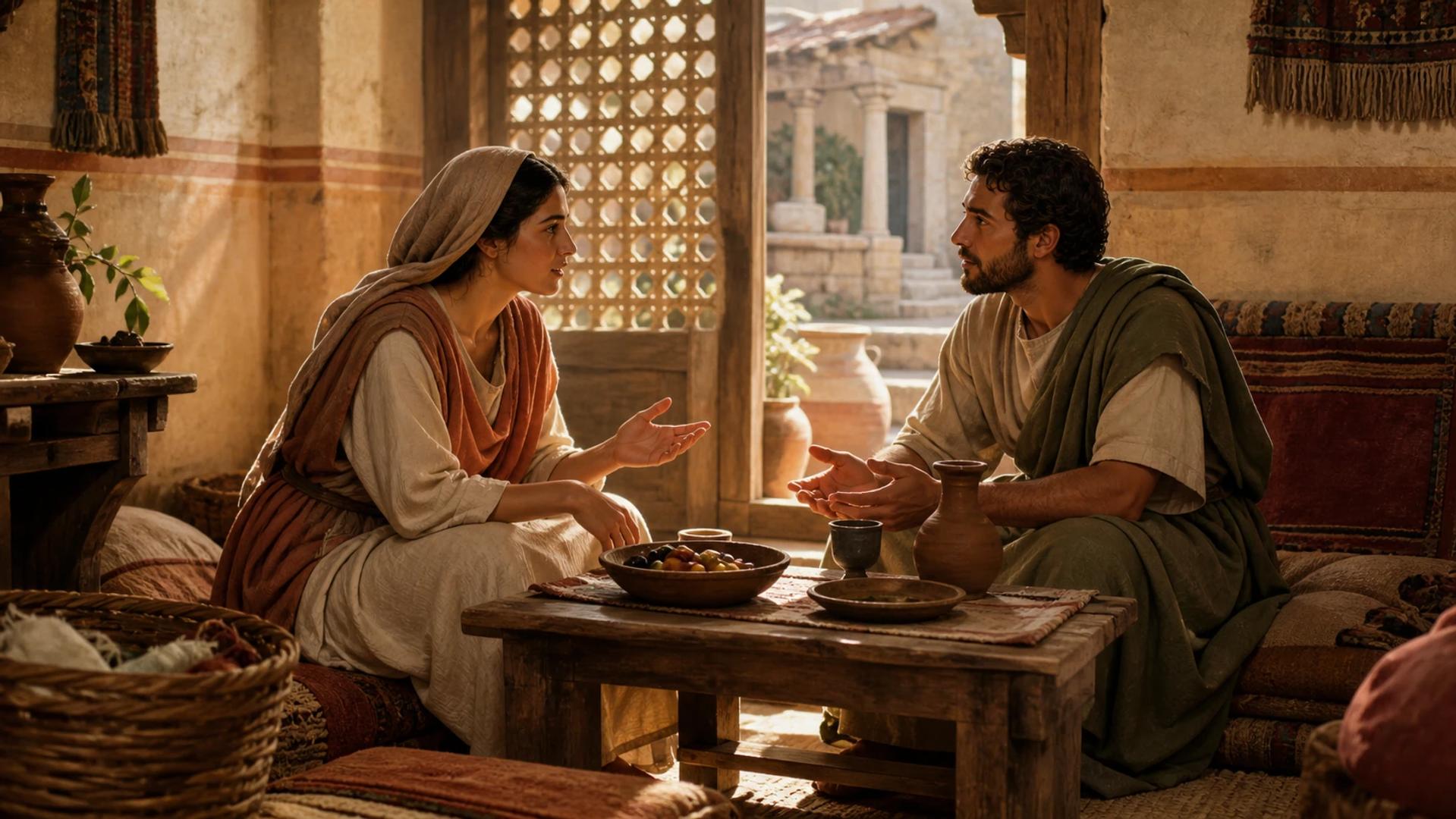

Ephesians 5 is the most debated chapter in the letter today, largely because of eight verses (5:22-33) addressing marriage. Reading them fairly requires first understanding a literary form almost entirely unfamiliar to modern readers: the household code.
What Household Codes Meant in the First Century
Household codes (Haustafeln, in the term scholars commonly use) were a recognized form of ethical instruction in the Greco-Roman world, laying out expected duties between paired roles within a household: husbands and wives, parents and children, masters and slaves. Aristotle wrote versions of this form centuries before Paul, and it was a familiar structure to any reader in a city like Ephesus, one of the largest and most commercially active cities in the Roman province of Asia.
What distinguishes Paul's version, in Ephesians 5:21 through 6:9, from its Greco-Roman contemporaries is not the categories addressed, which were standard, but the reasoning attached to each instruction. Where a typical household code grounded obligations in social order and household management, Paul grounds each one theologically, tying the husband-wife relationship specifically to Christ's relationship with the church, a move that was not part of the existing literary convention.
Mutual Submission, Ephesians 5:21
The marriage instructions do not begin at verse 22, where most quick citations start. They begin at verse 21: "Submit to one another out of reverence for Christ." Grammatically, this verse functions as the header for everything that follows, not a separate thought, since the Greek sentence structure carries the verb "submit" forward into verse 22, which in the original language has no verb of its own and depends entirely on verse 21 for its grammar.
This detail matters for how the passage is read. Whatever position a reader takes on what follows, the section as a whole opens with an instruction addressed to the entire congregation, husbands and wives together, before it addresses husbands and wives as separate categories.
The Christ and Church Marriage Metaphor
From 5:22, Paul instructs wives to submit to their husbands "as to the Lord," then immediately pivots, at greater length, to instruct husbands to "love your wives, just as Christ loved the church and gave himself up for her" (5:25). The husband's instruction, notably, receives more space and a more demanding standard in the passage than the wife's: sacrificial, self-giving love modeled on Christ's death, not simply authority or headship.
Paul closes the section by calling the whole comparison "a profound mystery," and explicitly states he is "talking about Christ and the church" (5:32), meaning the marriage relationship functions in the passage as an illustration of a theological reality Paul is more interested in establishing than in prescribing a specific marital power structure as the passage's central point.
How This Passage Is Read Today
Contemporary Christian traditions do not read this passage uniformly, and a fair guide should say so rather than present one camp's reading as the only one. Complementarian traditions read the passage as establishing distinct, divinely ordained roles, with headship assigned to the husband and submission to the wife, understood as compatible with equal worth rather than superiority. Egalitarian traditions read verse 21's mutual submission as the interpretive key for the entire passage, arguing that Paul is describing a mutual, self-giving relationship using role language familiar to his original readers rather than establishing a permanent hierarchy, and that the sacrificial standard placed on husbands functions as a check on unilateral authority rather than an affirmation of it.
Both readings take the text seriously and both have been held by significant denominations and theologians. A Bible study group working through this chapter should expect, and can productively discuss, this range of interpretation rather than assume the passage settles the question on its own.
For the practical instruction that follows this passage into chapter 6, see the Armor of God explained, or return to the Letter to the Ephesians guide for the full letter overview.
Visit Mary's house and Christian Ephesus
Private pilgrimages from Kusadasi with PhD-level guides, groups of 15 or fewer, and unhurried time for prayer at Mary's house. From €85 per person.
See the pilgrimage tours →