
Short answer: The best time to visit Ephesus is April to May or late September to October. Average highs are then 22 to 27°C in spring and 26 to 31°C in early autumn, the light is good and the crowds are smaller than in summer. July and August are hot (average highs near 35°C) and busy, so arrive at 08:00 when the gates open. Winter (November to March) is cool, wetter and very quiet. Whatever the month, the first two hours after opening are the best time of day.
That is the standard answer, and it deserves more precision than most guides give it. The right month depends on what you care about most: heat, crowds, photography or price. This guide goes month by month and hour by hour, and explains the biggest single driver of crowds at Ephesus: the cruise ships in Kuşadası. For the route, tickets and what to see, see the Ephesus ancient city complete guide.
I have guided at Ephesus for 40 years, in every month and in every kind of weather. The advice below comes from that experience; the temperatures and opening hours come from the official records.
Month-by-Month: The Honest Overview
| Month | Average high / low | Rainy days | Crowds | Verdict |
|---|---|---|---|---|
| January | 14°C / 4°C | 9 | Very low | Quiet, cool, often wet |
| February | 15°C / 5°C | 8 | Very low | Quiet, cool, often wet |
| March | 18°C / 6°C | 7 | Low | Underrated; spring starts |
| April | 22°C / 9°C | 5 | Low to medium | One of the best months |
| May | 27°C / 13°C | 4 | Medium | One of the best months |
| June | 32°C / 17°C | 2 | High | Hot; go early |
| July | 35°C / 20°C | 1 | Very high | Peak season; very hot |
| August | 35°C / 20°C | 1 | Very high | Peak season; very hot |
| September | 31°C / 16°C | 2 | Medium to high | Very good from mid-month |
| October | 26°C / 12°C | 4 | Medium | One of the best months |
| November | 20°C / 8°C | 6 | Low | Quiet, mild, some rain |
| December | 15°C / 5°C | 10 | Very low | Quiet, the wettest month |
Rainy days are days with at least 1 mm of rain. Averages hide hot spells: a July or August day at Ephesus can be well above 35°C.
The best months in order: October, April, May, late September and March, with October and April often interchangeable depending on what you prioritise.
The months to manage carefully: July and August are demanding. The white marble reflects heat and glare, so the site feels hotter than the forecast, and there is almost no shade between the Odeon and the Library of Celsus. You do not have to avoid these months, but you need an early start (the gates open at 08:00), at least 1.5 litres of water per person, and a route that puts the covered Terrace Houses in the middle of the day, when the open-air streets are at their worst.
Opening Hours by Season
Ephesus is open every day of the year. These are the hours listed by the Ministry of Culture and Tourism; current prices and any changes are on our Ephesus entrance fee page.
| Site | Summer 2026 (1 May to 1 October) | Winter 2026–27 |
|---|---|---|
| Ephesus | Opens 08:00; last ticket 18:00 (upper gate) or 19:00 (lower gate) | 08:00 to 18:00; ticket office closes 17:30 |
| Terrace Houses | Opens 09:00; last ticket 18:00 | 09:00 to 17:00; ticket office closes 16:30 |
| Night openings | June to 1 October, Wednesday to Saturday, 19:00 to 23:00 | None |
The Ministry sets the hours each season and sometimes changes them at short notice, so check the current times before a winter visit or a late arrival. Museum passes are not valid for the night openings.
Crowds: The Cruise Ship Effect
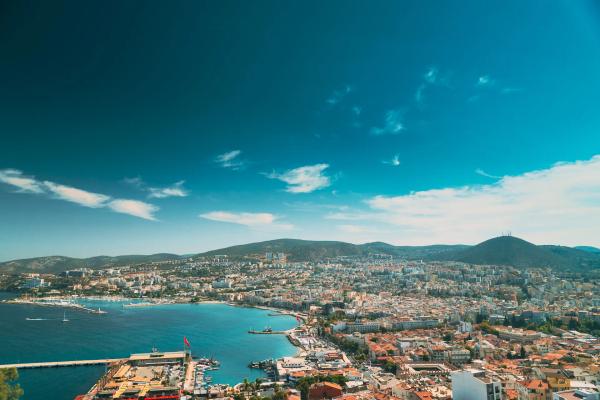
The biggest single driver of crowds at Ephesus is the cruise port at Kuşadası, about 20 km away, and most travel advice ignores it.
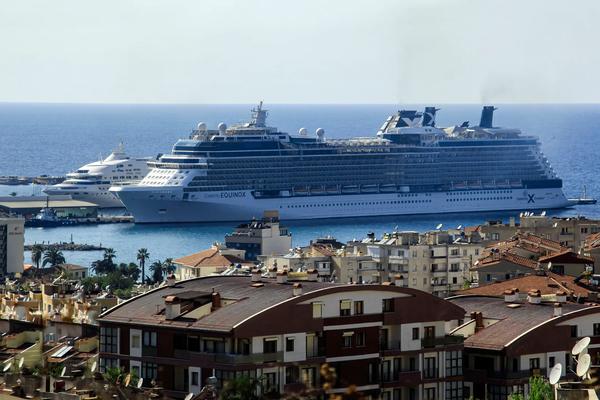
Kuşadası is Turkey's busiest cruise port. In 2025 it handled about 620 ship calls and 995,000 passengers, a record. Many of the passengers who go ashore head for Ephesus. On a typical port day the first coaches leave the port soon after the ship docks and reach Ephesus from about 09:00; most groups are back at the ship by mid-afternoon.
The result: when several large ships are in port, the area around the Library of Celsus and Curetes Street is at its fullest between about 10:00 and 13:00. On days with one small ship or none, the same streets are far quieter, even in summer.
From May to October a ship is in Kuşadası almost every day; published schedules list calls on 27 to 29 days of each of those months. Ships now call through the winter as well, but fewer and smaller. What matters is how many ships are in and how big they are. Schedules are published well ahead; you can check the day you plan to visit on a Kuşadası cruise schedule. If you can choose, a day with one small ship in July can be calmer than a day with three large ships in April.
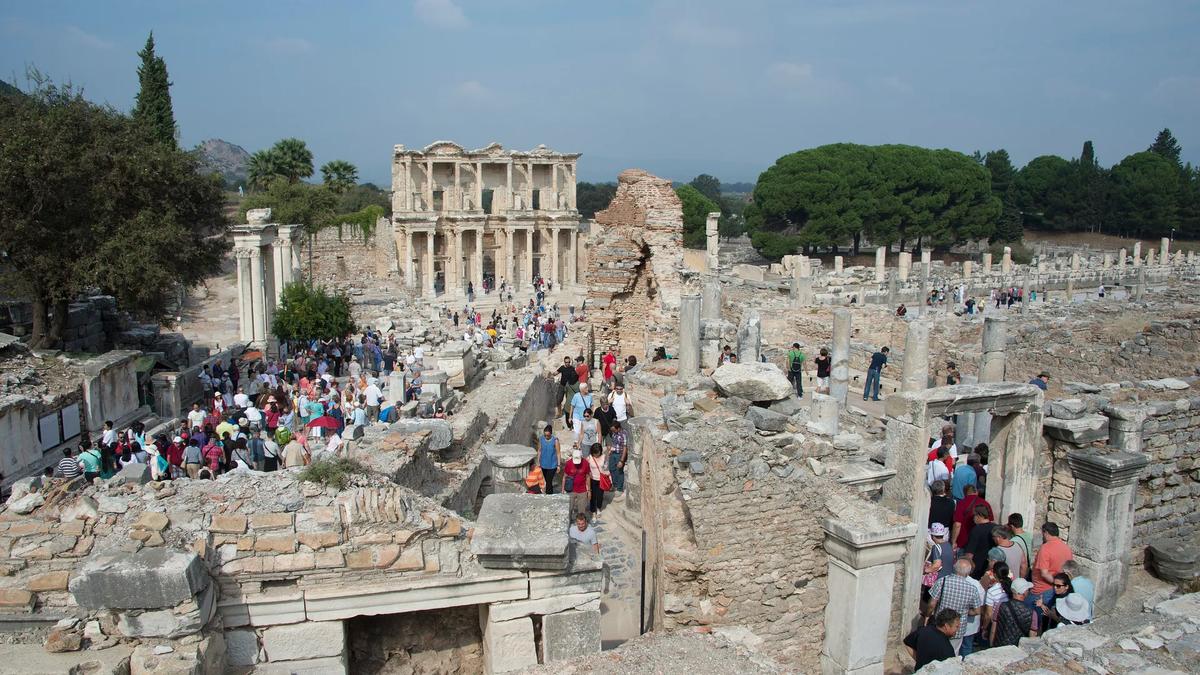
The hour-by-hour pattern on a typical busy day:
- 08:00 to 09:30: quiet across the whole site. Early risers and photographers.
- 09:30 to 10:30: the first cruise and coach groups arrive at the Lower Gate. Still manageable at the Upper Gate and the Odeon.
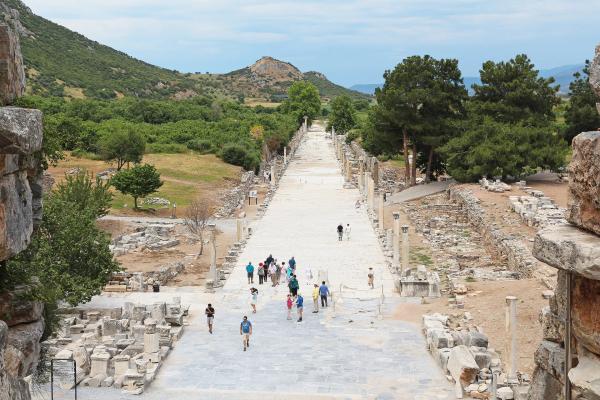
- 10:30 to 12:30: peak crowds. The square in front of the Library of Celsus is packed and Curetes Street is hard to walk without weaving between groups.
- 12:30 to 14:00: it eases as the first groups head back to their coaches.
- 14:00 to 17:00: much thinner. The Library facade is in shade, but the site is calmer.
- After 17:00: very quiet in summer, and the low evening sun is lovely on the monuments of Curetes Street.
Enter at the Upper Gate at 08:00 and you will be through the Odeon, the State Agora and into the Terrace Houses before the first cruise groups reach the Library of Celsus. That is the crowd-avoidance strategy, and it works best with a ticket already in hand: on busy port days the ticket office queue alone can take 30 minutes to an hour. Our Ephesus walking route shows the order of the stops from either gate.
Summer: Hot, Crowded, Still Worth It
July and August are the hardest months to visit, and also the months when most people can travel. If summer is your window, here is how to make it work:
Arrive at opening (08:00). There is no substitute. On a July day the difference between arriving at 08:00 and at 10:00, in heat, crowds and light, feels like two different places.
Put the Terrace Houses in the middle of the day. They sit under a large modern roof, so they are shaded and cooler than the open streets. Spending 30 to 45 minutes inside between 11:00 and 13:00 makes the second half of the route much more comfortable.
Consider an evening visit. From June to 1 October the site also opens on Wednesday to Saturday evenings from 19:00 to 23:00. It is the coolest way to see Ephesus in high summer.

Wear closed shoes with grip soles. The marble paving is polished smooth by two thousand years of feet, and in summer a fine dust settles on it. It can be as slippery as ice. Sandals cause a steady stream of twisted ankles every summer.
Bring more water than you think you need. Once you are inside, there are few places to buy it. 1.5 litres per person is the minimum; 2 litres is safer.
Shoulder Season: April–May and September–October
Shoulder season is the sweet spot, and the guidebooks are right to recommend it. They rarely explain exactly why.
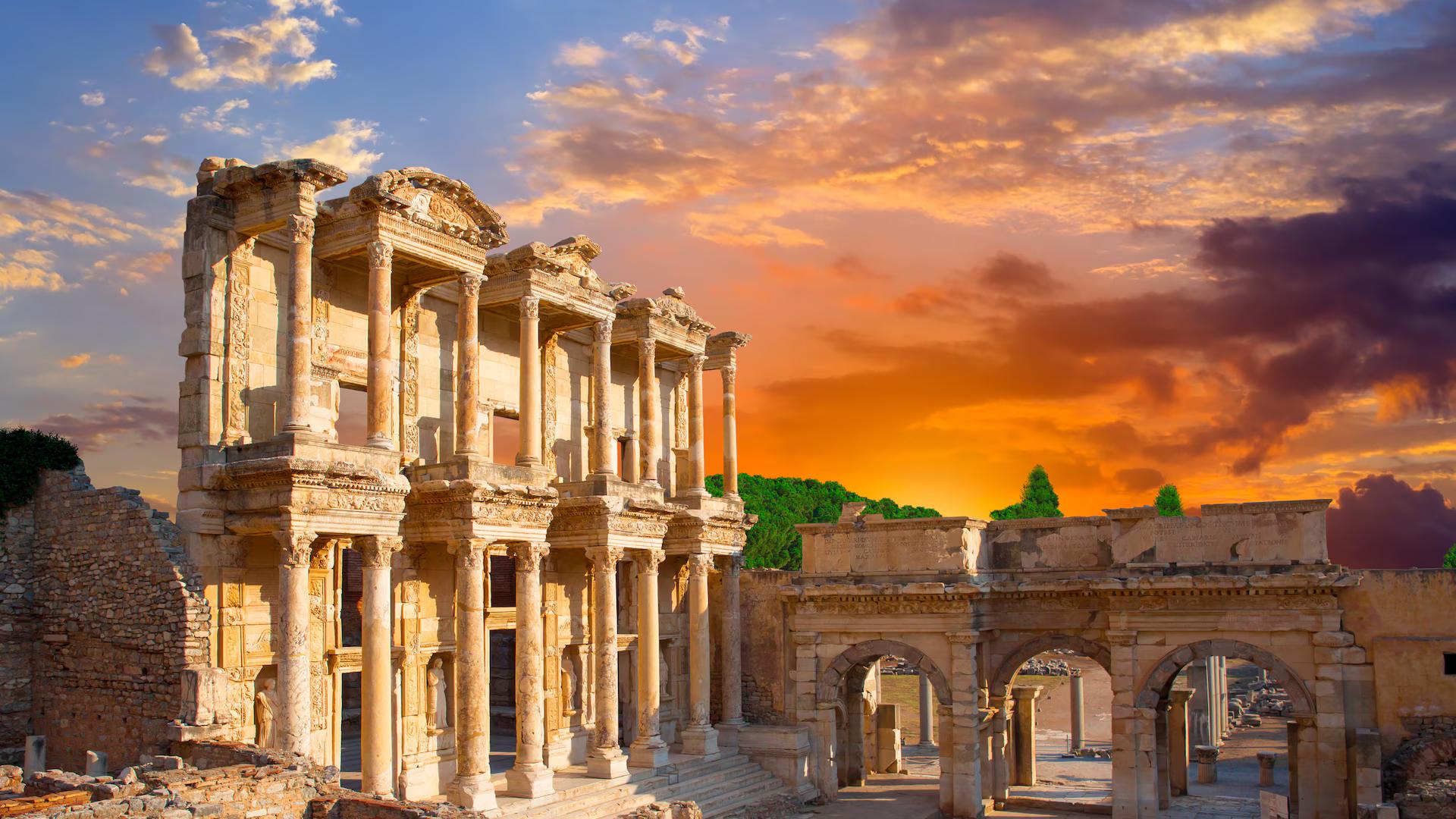
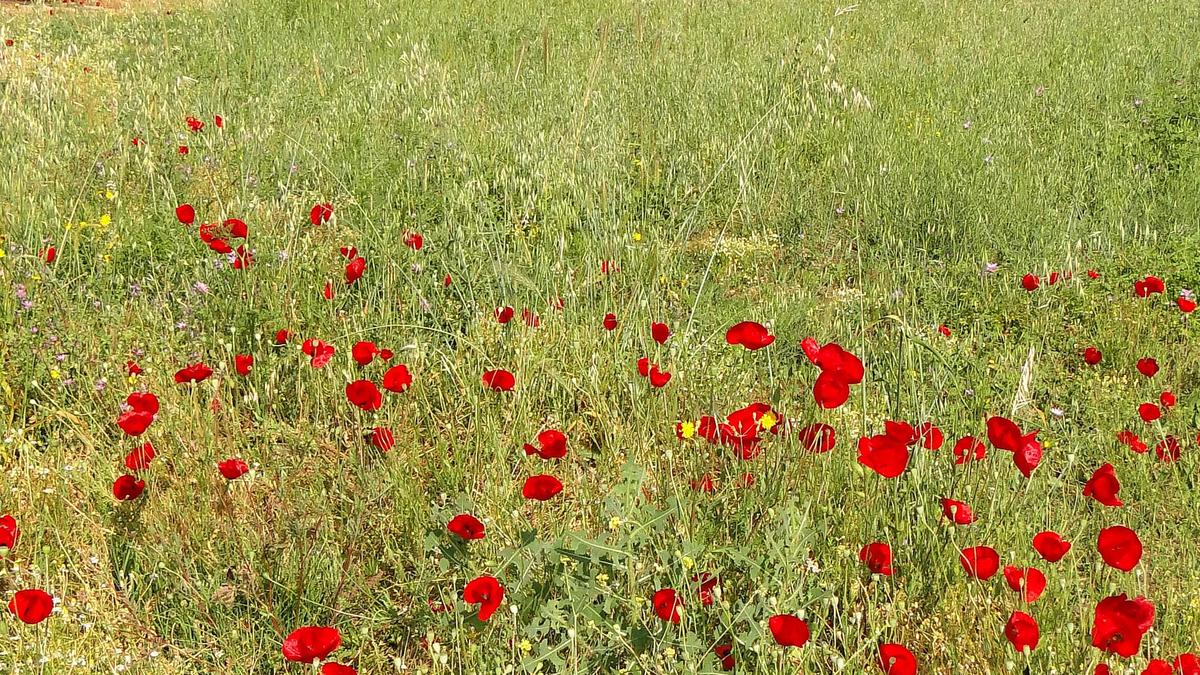
April and May: average highs of 22 to 27°C are comfortable for walking, and rain is uncommon (four or five rainy days a month). The site is green: in April wildflowers grow in the cracks of the marble, and in May poppies flower in the fields around the ruins. Crowds are lower than in summer, though cruise traffic builds through May. The low morning sun between 08:00 and 10:00 gives the Library of Celsus facade its deepest shadows.
One April note: morning dew on the marble. In April, and to a lesser extent in October, cool nights leave condensation on the polished marble that can last until mid-morning. Curetes Street is slippery for the first hour after opening on cool, damp days. This is no reason to avoid April. Take the first stretch slowly and wear good shoes. It is something you only learn by guiding the site in these conditions.
September and October: the summer heat breaks during September. Early September is still hot, but the average high falls from 31°C in September to 26°C in October. The sun is lower, so the golden morning light lasts longer. Ships still call almost daily in October, but the crowds are smaller than in August. October is, in my view, the single best month to visit Ephesus if you can choose.
Winter: November–March
Winter at Ephesus is underrated by the travel industry and overrated as a hardship by visitors who have not tried it.
What winter actually means at Ephesus:
- Average highs of 14 to 18°C from December to March, and nights around 4 to 6°C. Cool, but easy walking weather in a warm layer.
- Very small crowds. In January and February you can walk Curetes Street with almost no one else in sight. The site, a flood of people in summer, becomes quiet and contemplative.
- Winter is the rainy season. December and January each get about 125 mm of rain over 9 or 10 days, so pack a rain jacket and keep a day spare if you can. Between storms the days are often clear and mild, and a clear February morning at Ephesus beats a hot July noon in a crowd.
- The Library of Celsus in low winter light, with no crowds and the stone grey rather than golden, is a different look and a beautiful one.
What winter does not give you: short days (the sun sets around 17:50 in December), dormant vegetation and a chance of rain on the day you choose. If photographs in warm light are your priority, winter is not ideal. If solitude and comfortable temperatures matter most, winter is excellent.
Check the hours: in winter the Terrace Houses close at 17:00 (ticket office 16:30) and the main site at 18:00 (ticket office 17:30), as listed on 2 November 2026. Plan accordingly if the Terrace Houses are a priority.
Photography: Best Light by Season
The facade of the Library of Celsus faces east, so the morning sun lights it directly and by early afternoon it is in shade. Because the gates open at 08:00 all year, the morning window you get depends on when the sun rises. Turkey keeps the same clock all year (UTC+3), so sunrise is late in winter.
| Month | Sunrise | Sunset | Morning light at the Library |
|---|---|---|---|
| January | 08:25 | 18:13 | Sun rises after opening; best from about 09:00 |
| March | 07:24 | 19:17 | Good from opening |
| April | 06:37 | 19:45 | Good from opening to about 10:00 |
| June | 05:47 | 20:34 | Sun already high by 09:00; come at opening |
| July | 05:59 | 20:33 | Sun already high by 09:00; come at opening |
| October | 07:18 | 18:35 | Long golden window from opening |
| December | 08:19 | 17:52 | Sun rises after opening; best from about 09:00 |
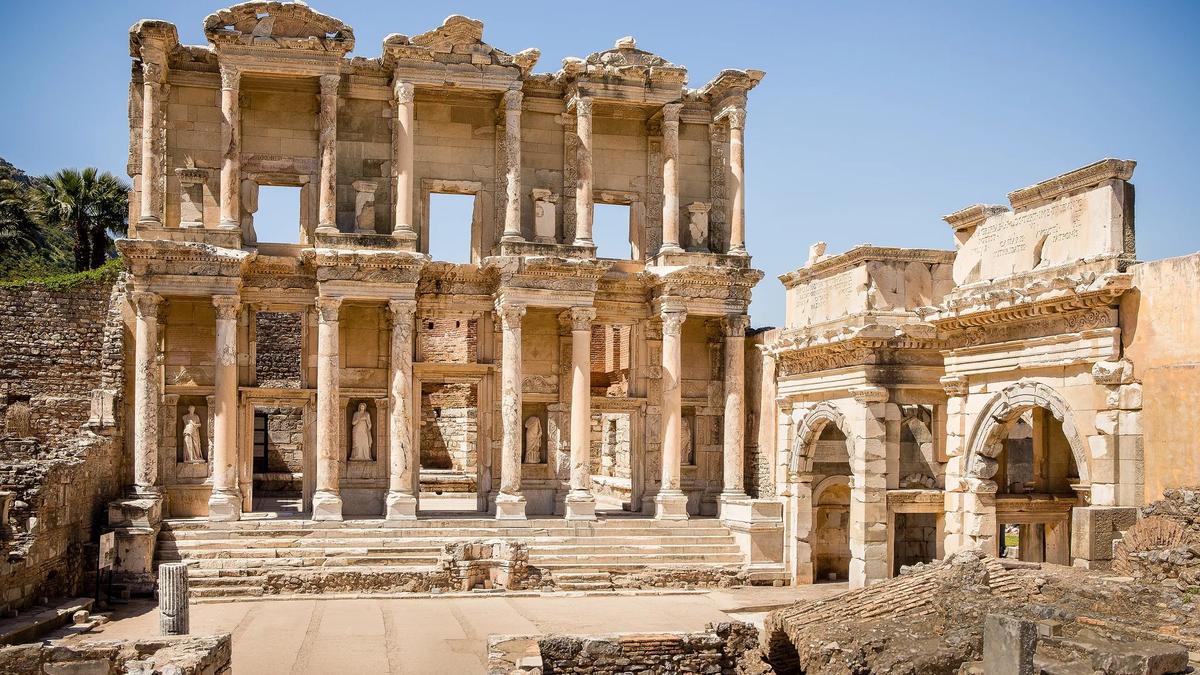
October and April combine an early enough sunrise with low, angled light. In midsummer the sun climbs fast, so the soft light is over soon after opening.
For the best viewpoints at the Library (distance, angle and the details of the columns), see the Library of Celsus guide.
Frequently Asked Questions
What is the best month to visit Ephesus?
October, closely followed by April and May. Average highs are 22 to 27°C, rain is uncommon and the crowds are smaller than in summer. March and November are quieter still, with a higher chance of rain.
Is Ephesus worth visiting in July?
Yes, but arrive at opening (08:00) and plan your route so the covered Terrace Houses fall between 11:00 and 13:00, when the open marble is hottest. Or go on a Wednesday to Saturday evening, when the site reopens from 19:00 to 23:00. A July visit at 08:00 is better than a visit in any month at 10:30.
How crowded is Ephesus on a typical summer day?
It depends on the ships in Kuşadası. With several large ships in port, the Library of Celsus square and Curetes Street are packed from about 10:00 to 13:00. On days with fewer ships it is much calmer. Entering at the Upper Gate at 08:00 avoids the worst in any season.
What is the weather like in Ephesus in October?
Warm and mostly dry: the average high is 26°C and the average low 12°C, with about four rainy days in the month. Early October can still feel like summer; by the end of the month you will want a light layer in the morning.
Is Ephesus good to visit in April?
Yes, it is one of the best months. Average highs are about 22°C, the site is green and full of wildflowers, and crowds are lower than in summer. Watch for slippery dew on the marble early on cool mornings.
Is winter too cold for Ephesus?
Not for most visitors. Average highs are 14 to 18°C from December to March and the site is open every day. The real trade-offs are rain (December and January are the wettest months), shorter days and a shorter window of good morning light.
What should I wear in summer?
Light, breathable clothing, a hat and sunscreen (there is almost no shade between the monuments), and closed shoes with rubber grip soles. Not sandals. Not heels.
What is the best time of day to visit Ephesus?
08:00, at opening, in every season. The crowd and temperature advantage of an early start is bigger than the advantage of choosing any particular month.
On a private Ephesus tour, arrival time, route and crowd avoidance are part of the guide's planning: you arrive at the right gate at the right time and stay ahead of the crowd wave.
Part of the Ephesus ancient city complete guide, the full history and visitor resource for Ephesus.
Visiting Ephesus from a cruise ship?
Private Ephesus tours from Kusadasi port with a licensed guide, a private Mercedes, Skip-the-Line entry and live ship monitoring. From €70 per person.
See shore excursions →Staying in a hotel? See private Ephesus tours