
Short answer: The church of Laodicea was the Christian congregation of Laodicea on the Lycus, a wealthy Roman city whose ruins lie on the northern edge of Denizli in western Turkey, about 10 km from Pamukkale. It is the seventh and last church addressed in Revelation (3:14-22) and the only one that receives no praise at all. Christ calls it lukewarm, "neither cold nor hot," and tells a church that says "I am rich" that it is "wretched, pitiful, poor, blind and naked."
The church of Laodicea receives some of the harshest words in all seven letters: "I am about to spit you out of my mouth." It is also accused of the least obvious failure. Laodicea was not persecuted like Smyrna, not divided by false teaching like Pergamon or Thyatira, and not dying like Sardis. By every visible measure it was thriving. The letter's complaint is that this success had become the problem.
This article covers what Revelation 3:14-22 says, why many readers connect the "lukewarm" image with the city's water supply, how the letter's other images match Laodicea's real industries, and what became of the church afterwards. For opening hours, tickets and how to get there, see our Laodicea Ancient City visitor guide.
The Letter to Laodicea: Revelation 3:14-22
The letter is addressed "to the angel of the church in Laodicea" and presents Christ as "the Amen, the faithful and true witness, the ruler of God's creation." That title sets up the letter's theme: a true witness judging a church that has judged itself wrongly.
The rebuke comes at once: "I know your deeds, that you are neither cold nor hot. I wish you were either one or the other! So, because you are lukewarm, neither hot nor cold, I am about to spit you out of my mouth" (Revelation 3:15-16, NIV). Laodicea is the only one of the seven churches given no word of praise. Even Sardis, the other church sharply rebuked, is told of "a few people" who "have not soiled their clothes."
The letter then quotes the church's own verdict on itself: "I am rich; I have acquired wealth and do not need a thing." Against it stands Christ's: "But you do not realize that you are wretched, pitiful, poor, blind and naked." The cure is to buy from him "gold refined in the fire," "white clothes to wear" and "salve to put on your eyes, so you can see," each a pointed reversal of something the city was proud of.
The letter is harsh, but it is not a rejection. "Those whom I love I rebuke and discipline. So be earnest and repent." Then comes one of the best-known lines in the Bible: "Here I am! I stand at the door and knock. If anyone hears my voice and opens the door, I will come in and eat with that person, and they with me." The promise to the one who is victorious closes all seven letters: "the right to sit with me on my throne."
Why "Neither Hot Nor Cold" Is Not Just a Metaphor
The lukewarm image works on its own as a picture of half-hearted faith. But many commentators think Laodicea's water supply gave it a sharper local meaning for the first readers.
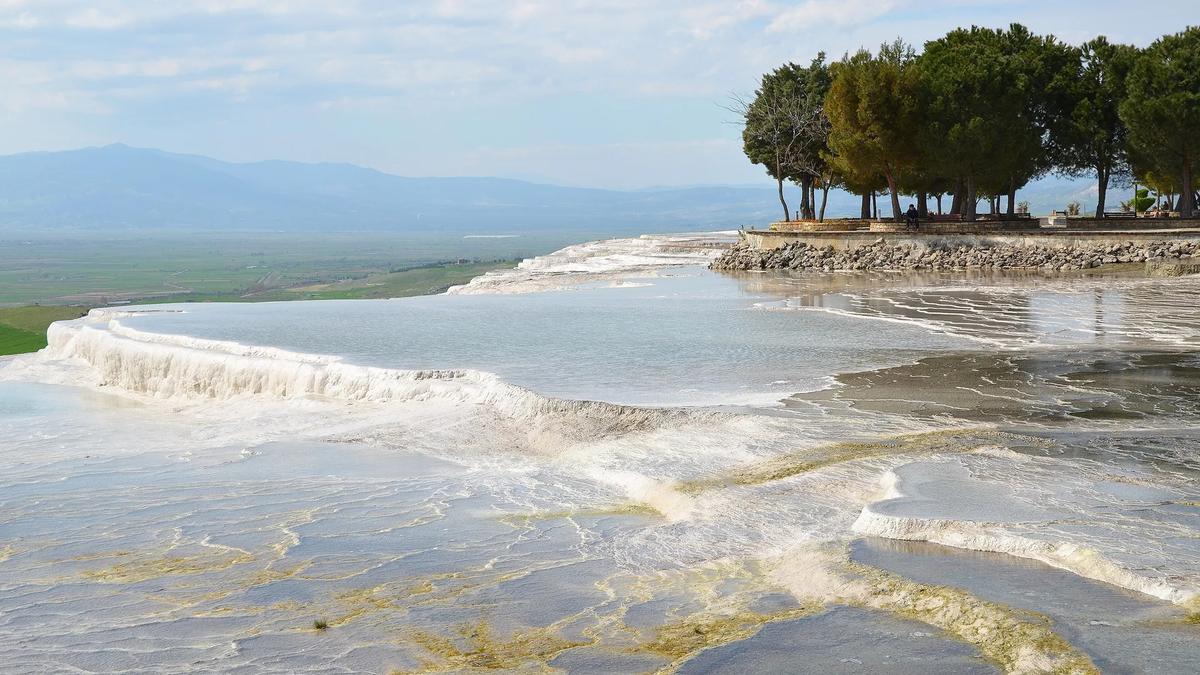
Laodicea had no good spring of its own. Its water came from springs about 8 km to the south, at today's Başpınar, through pipelines of stone blocks and clay pipes. The water was heavy with lime: some of the stone pipes of the siphon are thick with deposits, and some are completely choked. Nearby stood two neighbours mentioned in Paul's letters: Hierapolis, about 10 km north, with its hot springs and white travertine terraces (modern Pamukkale), and Colossae, about 19 km by road to the east.
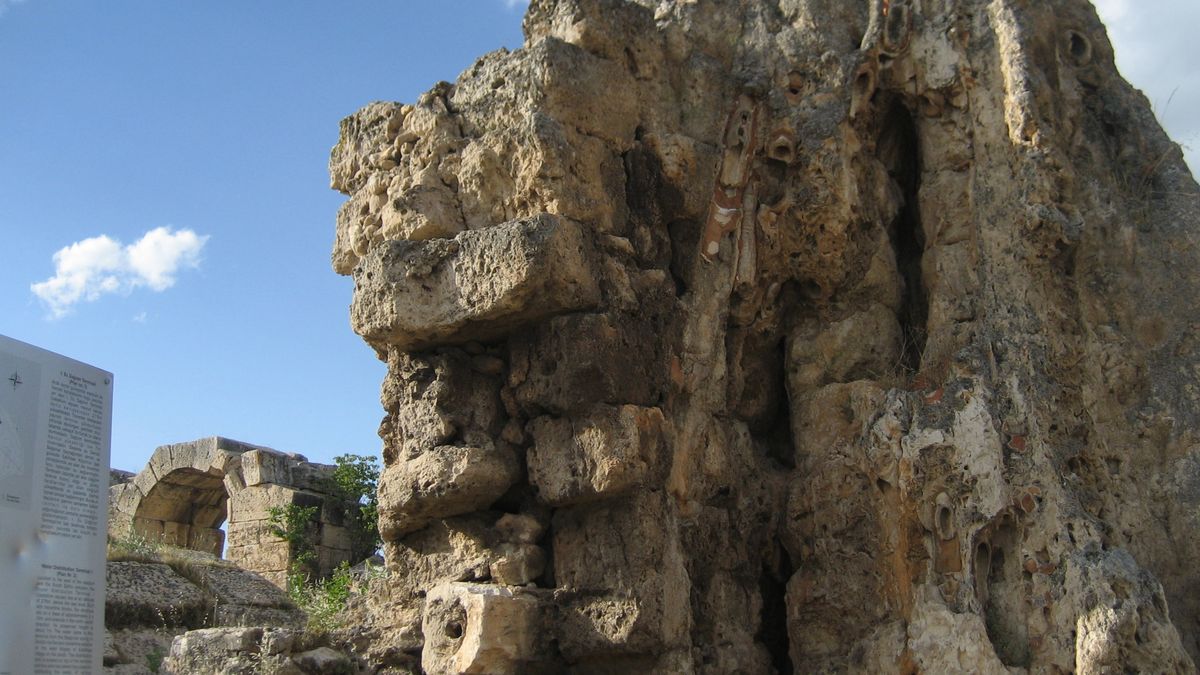
In this reading, hot water, like the springs of Hierapolis, was good for healing, and cold water was good for drinking. Water piped a long way and arriving tepid and full of minerals was good for neither. So "I wish you were either one or the other" does not mean that open rejection is better than half-hearted faith. It means that a church should be useful, as hot or cold water is, and Laodicea's was not.
Not every scholar accepts the water explanation, and the text does not mention water. But it fits the way the other letters draw on local detail, and it would have meant something to people who drank that water every day.
Rich, Blind, and Naked: The City's Industries in the Letter's Imagery
Each correction in the letter answers something Laodicea was known for in the Roman world.
Money. Laodicea stood where the road from Ephesus and the coast met the routes into central Anatolia, and it grew rich on trade and banking. Its bankers did business with Romans, among them Cicero, who held court here as governor in 50 BC. The letter's advice to buy "gold refined in the fire" answers a city that measured its worth in money.
Wool. The geographer Strabo, writing in the early 1st century AD, says the sheep around Laodicea gave wool softer even than the famous wool of Miletus, and raven-black. The letter's advice to buy "white clothes to wear, so you can cover your shameful nakedness" turns the city's pride in its black wool into a picture of spiritual nakedness.
Medicine. Strabo also describes a well-known school of medicine at a temple between Laodicea and the village of Carura, and the region was linked with an eye remedy known as "Phrygian powder." The advice to buy "salve to put on your eyes, so you can see" turns a local product into a picture of a blindness the church could not see in itself.
Taken together, the letter names the city's sources of pride, money, wool and medicine, and tells the church that none of them supplied what it lacked.
The boast that it did "not need a thing" had a history. When an earthquake destroyed Laodicea in AD 60, the Roman historian Tacitus recorded that the city "without any relief from us, recovered itself by its own resources" (Annals 14.27). A generation later, a church in that proud, self-made city could easily have taken the same attitude into its faith.
Laodicea in Paul's Letters
Revelation was not the first New Testament book to mention Laodicea. Some decades earlier, Paul's letter to the Colossians speaks of the believers there several times. Paul writes, "I want you to know how hard I am contending for you and for those at Laodicea" (Colossians 2:1), and says that Epaphras, a Christian from Colossae, "is working hard for you and for those at Laodicea and Hierapolis" (4:13). Paul had apparently never visited Laodicea himself: in the same verse he counts its believers among "all who have not met me personally."
Paul also sends greetings "to the brothers and sisters at Laodicea, and to Nympha and the church in her house" (4:15), a reminder that the first Laodicean Christians met in homes. And he asks the Colossians to see that his letter "is also read in the church of the Laodiceans and that you in turn read the letter from Laodicea" (4:16). That letter from Laodicea has not survived.
What Became of the Church of Laodicea
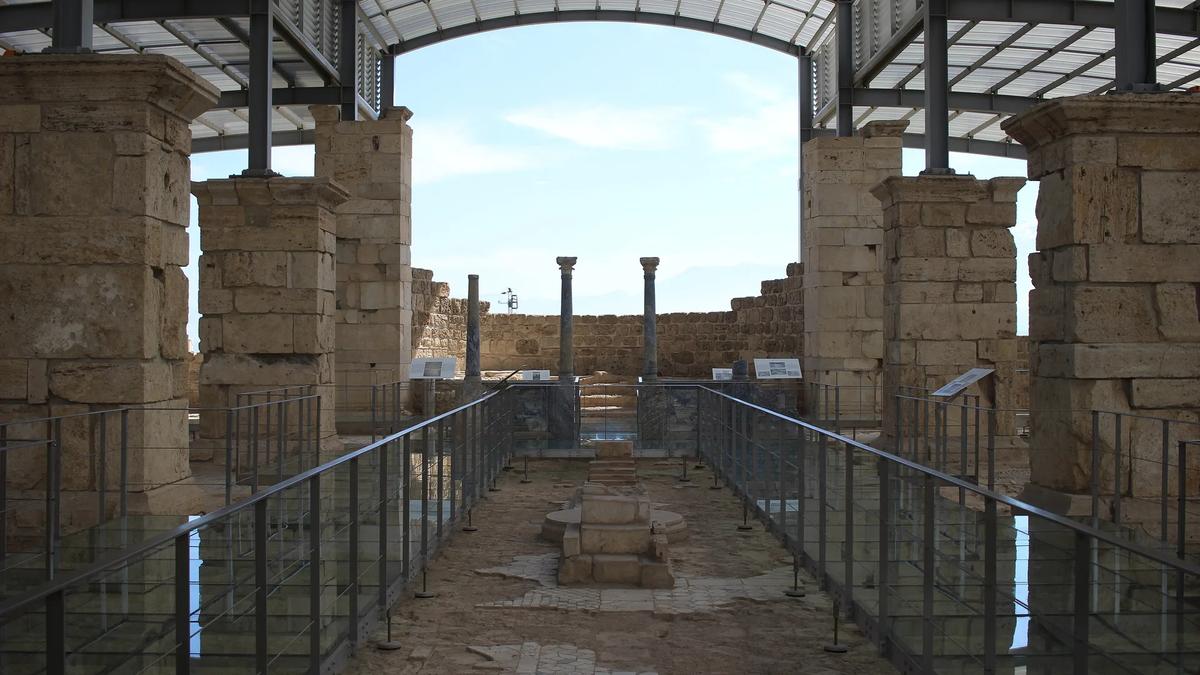
The letter did not end the church. Laodicea became a bishopric early, and lists of its bishops include Sagaris, a martyr around AD 166, and Nunechius, who attended the Council of Nicaea in 325. In the reign of Constantine the Great, soon after Christianity was legalised in 313, the city built the great church whose ruins you can visit today. It had three aisles with mosaic and coloured marble floors and a baptistery with a cross-shaped font that you step down into.
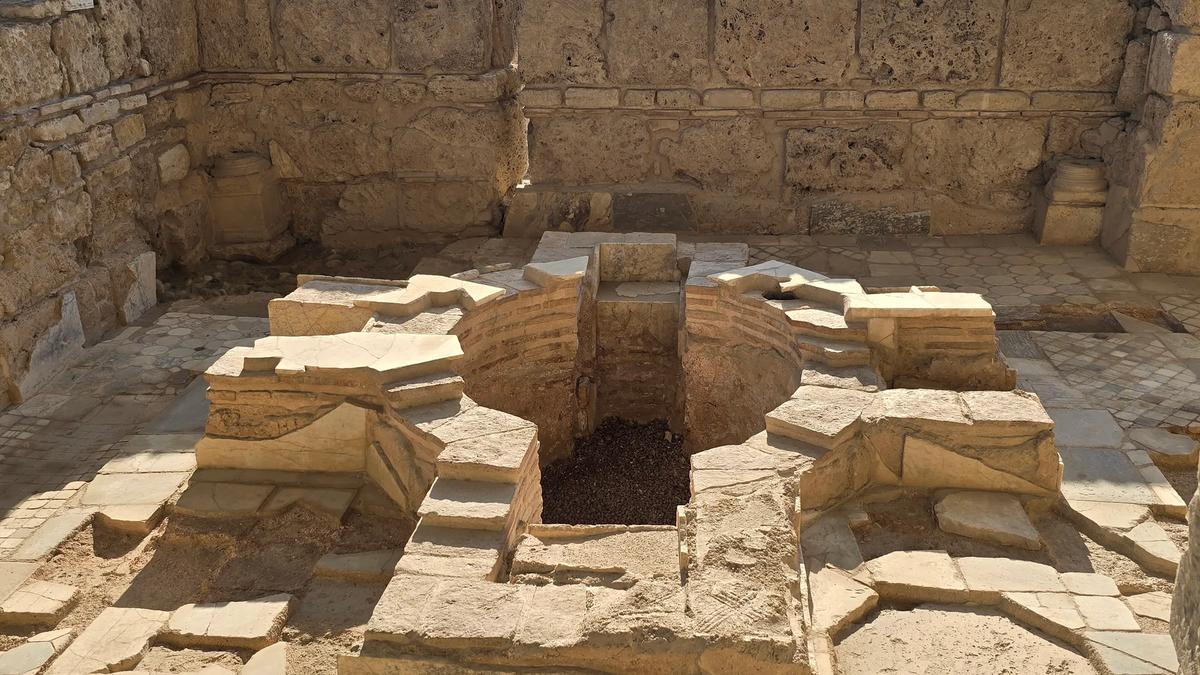
Around 363-364 about thirty clergy from Asia Minor met here at the Council of Laodicea. Its sixty canons, short rules on church discipline and worship, are important in the history of church discipline and worship. Earthquakes struck the city again in 494 and in the early 7th century, after which most people moved to the slopes of the mountain where Denizli stands today. Bishops of Laodicea are known until 1450.
Laodicea's Ruins Today
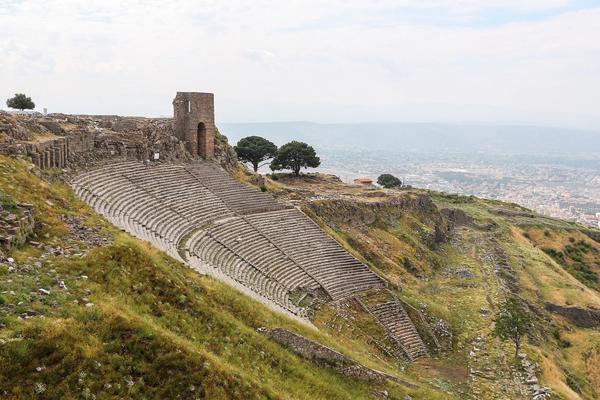
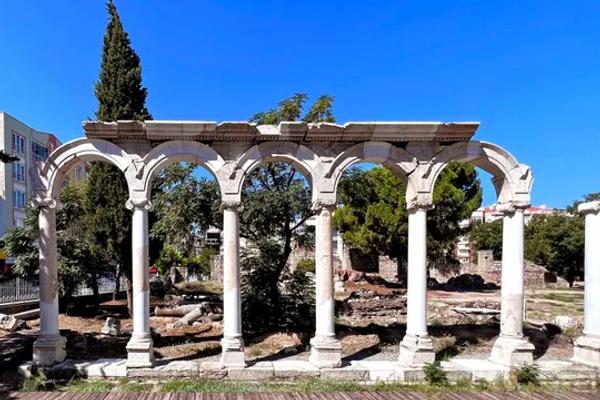
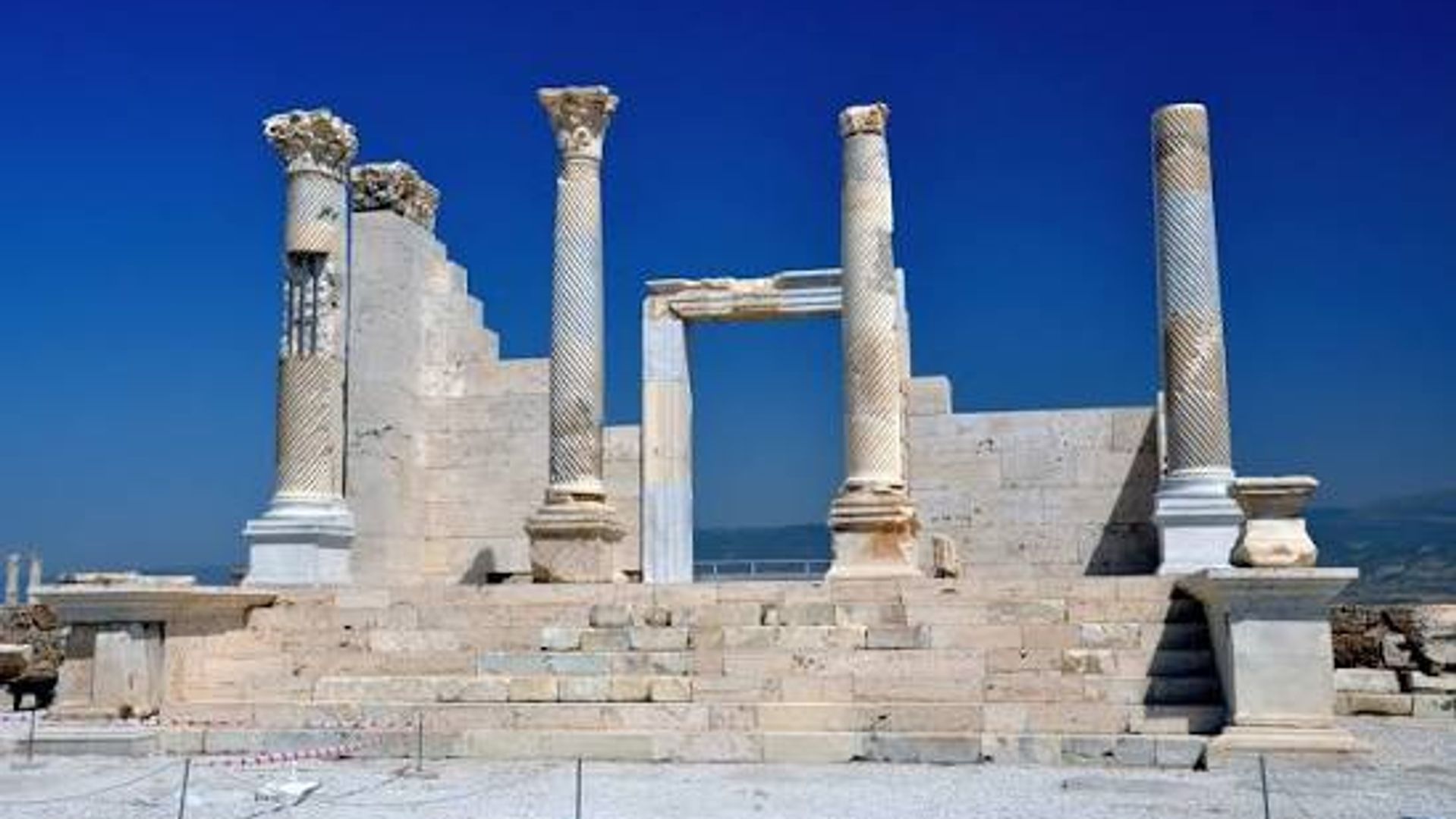
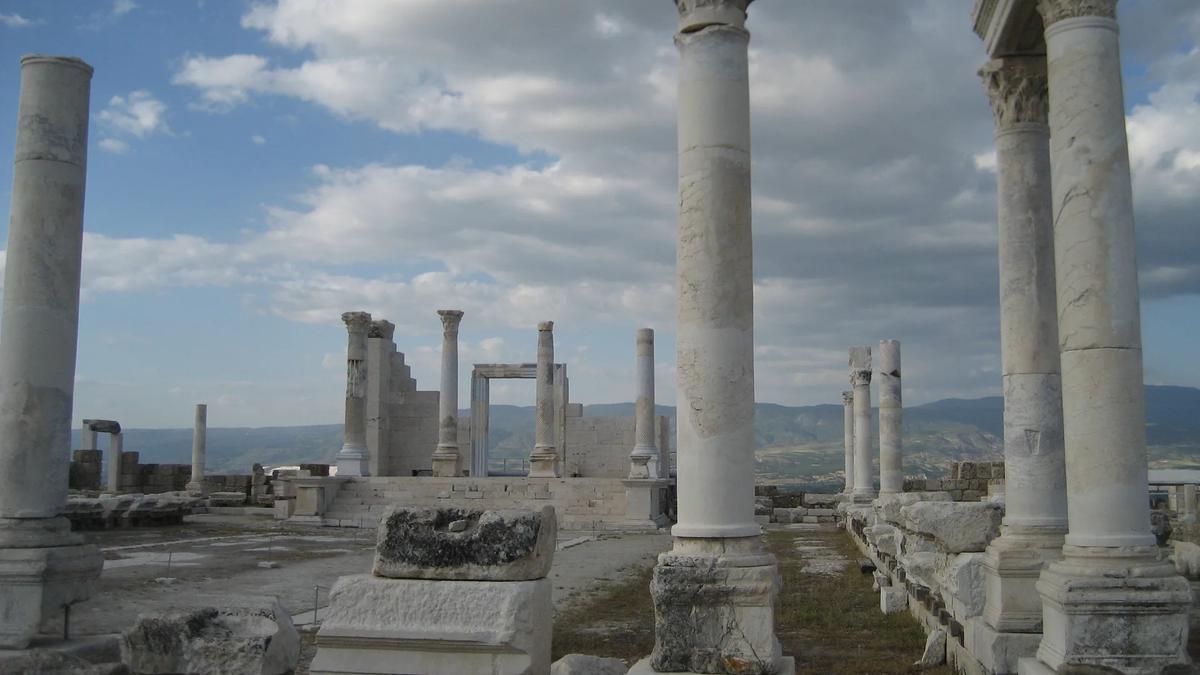
Laodicea is one of the largest archaeological sites in Turkey. Systematic excavation began only in 2002-2003, and the church was found in 2010, so much of what you see today is the result of the last twenty years. The church stands under a protective roof among the site's main monuments, with Syria Street, two theatres, a stadium and the remains of the water system. For the full list of what to see, opening hours, tickets and how to get there, see our Laodicea visitor guide.
The church building is not the church John wrote to. That was a congregation that met in homes, and the building went up some two centuries later. But it is one of the oldest church buildings known in Anatolia, and it stands in the city whose Christians first heard the letter read aloud.
Visiting Laodicea and Pamukkale Together
Laodicea is about 15 to 20 minutes by road from the travertines of Pamukkale and the ruins of Hierapolis, so many visitors see both in a day. It is the natural last stop on a full Seven Churches circuit, reached after Philadelphia to the northwest. Our map of the seven churches shows the route.
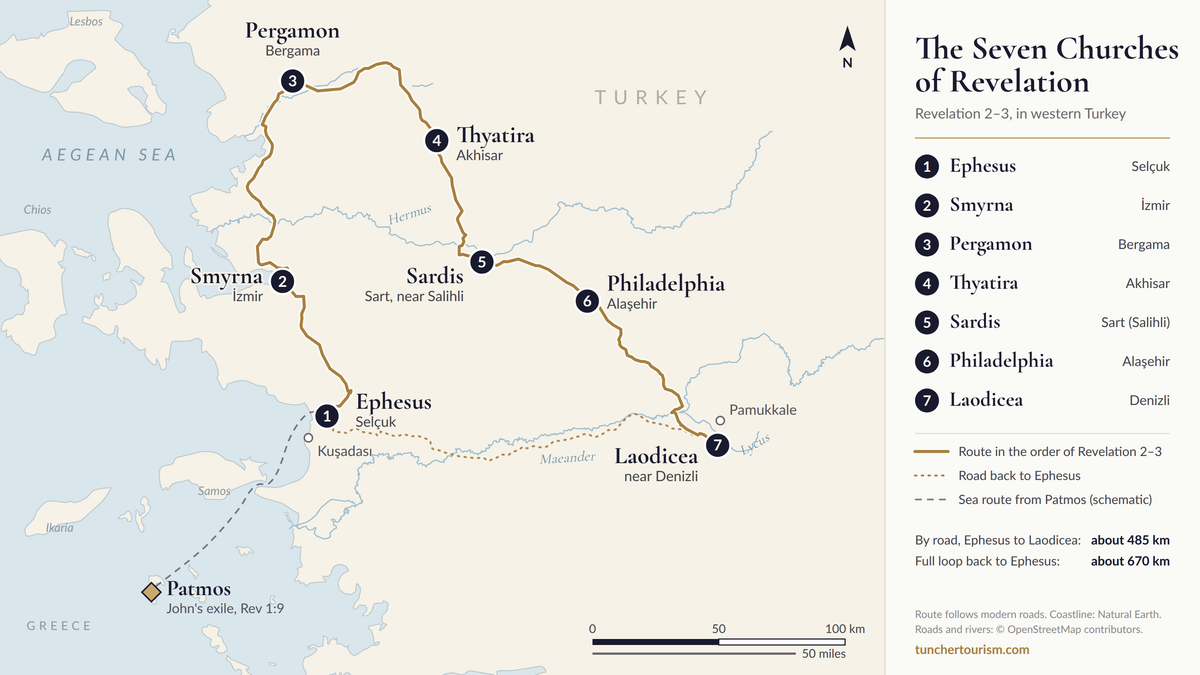
From Kuşadası or Ephesus, Laodicea is about 185 to 190 km by road, roughly two and a half hours each way, so it makes a full day. Our Laodicea Ancient City tour covers the site with a guide, and our Pamukkale and Hierapolis tour covers the terraces and Hierapolis. Our four-day Seven Churches tour visits Laodicea and Colossae on its last day.
Frequently Asked Questions
Where is the church of Laodicea located today?
The ruins of Laodicea lie on the northern edge of Denizli in southwestern Turkey, about 10 km south of Pamukkale. The congregation Revelation addresses no longer exists, but you can visit the city and its 4th-century church.
What was wrong with the church of Laodicea?
It was complacent. The church thought it was rich and needed nothing, while Christ saw it as "wretched, pitiful, poor, blind and naked." It was lukewarm, neither cold nor hot, and it is the only one of the seven churches given no praise at all (Revelation 3:14-22).
Why does Revelation call Laodicea "lukewarm"?
As an image of a faith that is useful to no one. Many commentators link it to the city's water, piped in from springs about 8 km away and heavy with lime, in contrast to the hot springs of nearby Hierapolis. In this reading, hot water heals and cold water refreshes, but tepid water does neither.
What does the Bible say about the church of Laodicea?
Revelation 3:14-22 rebukes it for being lukewarm and self-satisfied, counsels it to buy gold, white clothes and eye salve from Christ, and ends with "Here I am! I stand at the door and knock" and a promise to the victorious. Paul's letter to the Colossians also mentions the believers at Laodicea (Colossians 2:1; 4:13-16).
Who does the church of Laodicea represent?
First, a real congregation in a rich Roman city. Because every letter ends with a call to hear "what the Spirit says to the churches," readers also apply it to any church that is comfortable and self-reliant. In the prophetic reading of the seven letters as stages of history, popularised by the Scofield Reference Bible, Laodicea stands for the church of the last days, though Revelation itself does not say this.
Was Laodicea a rich city?
Yes. It was a banking and trading center known for its black wool, and when an earthquake destroyed it in AD 60, Tacitus says it rebuilt from its own resources without help from Rome. That wealth lies behind the church's boast, "I am rich."
What can you still see at the ruins of Laodicea today?
The 4th-century church under its protective roof, the colonnaded Syria Street, two theatres, a stadium, temples and parts of the water system crusted with lime. Our Laodicea visitor guide lists the main monuments, opening hours and tickets.
Is Laodicea the same as Pamukkale?
No. Pamukkale, with the ruins of Hierapolis, is about 10 km north of Laodicea, a 15-to-20-minute drive. The two sites are often visited on the same day.
How far is Laodicea from Ephesus?
About 185 km (115 miles) by road, roughly two and a quarter hours by car. From Kuşadası cruise port it is about 190 km and two and a half hours.
To return to the start of the trail, see the Seven Churches of Revelation guide for the full route and planning information, or go back to the Church of Philadelphia, one of the two letters with no rebuke at all. For the church that opened the cycle, see our Church of Ephesus guide.
Visit all Seven Churches with a historian
A four-day private tour of Ephesus, Smyrna, Pergamon, Thyatira, Sardis, Philadelphia and Laodicea, for groups of up to 15.
See the Seven Churches tour →Starting in Izmir? See the tour from Izmir