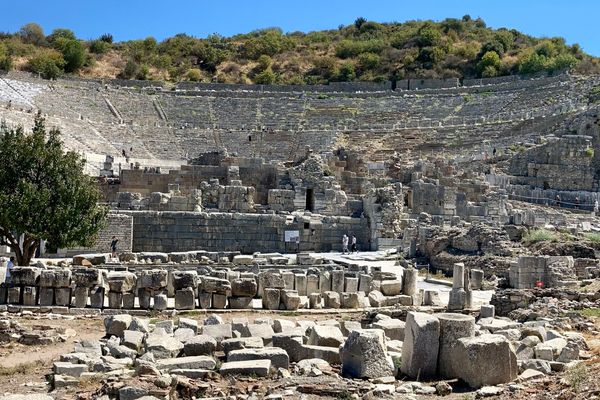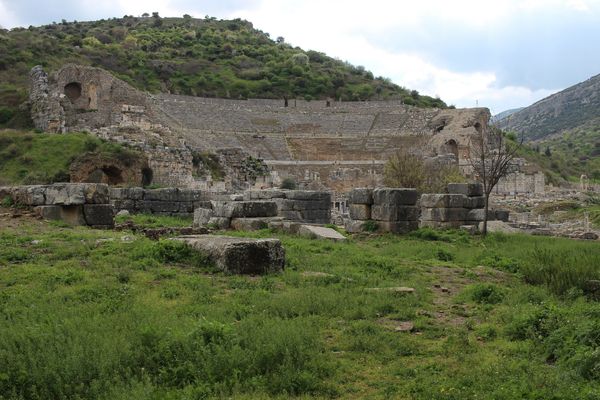

Short answer: The church of Ephesus was the Christian congregation of ancient Ephesus, whose ruins lie next to Selçuk in western Turkey, 25 minutes from Kuşadası cruise port. It receives the first of the seven letters in Revelation (2:1-7). Christ praises its hard work, perseverance and testing of false apostles, then rebukes it: "You have forsaken the love you had at first." Paul had founded the church about forty years earlier, and you can still stand in the Great Theatre where the riot of the silversmiths took place (Acts 19).
The church of Ephesus receives the first of the seven letters in Revelation, and it is also the church with the most recorded history before the letter arrived. By the time John wrote from Patmos near the end of the 1st century, the Ephesian congregation had been founded and taught by Paul decades earlier. The letter in Revelation 2:1-7 is a check on a church that had every reason to be doing well, and the verdict is more complicated than pass or fail.
This article covers what the letter says, what its central warning means, and how Paul's ministry in the city set the stage for it. For the monuments themselves, the Library of Celsus, the Terrace Houses, the Great Theatre and the rest of the site, see our Ephesus ancient city complete guide. This page focuses on the biblical story.
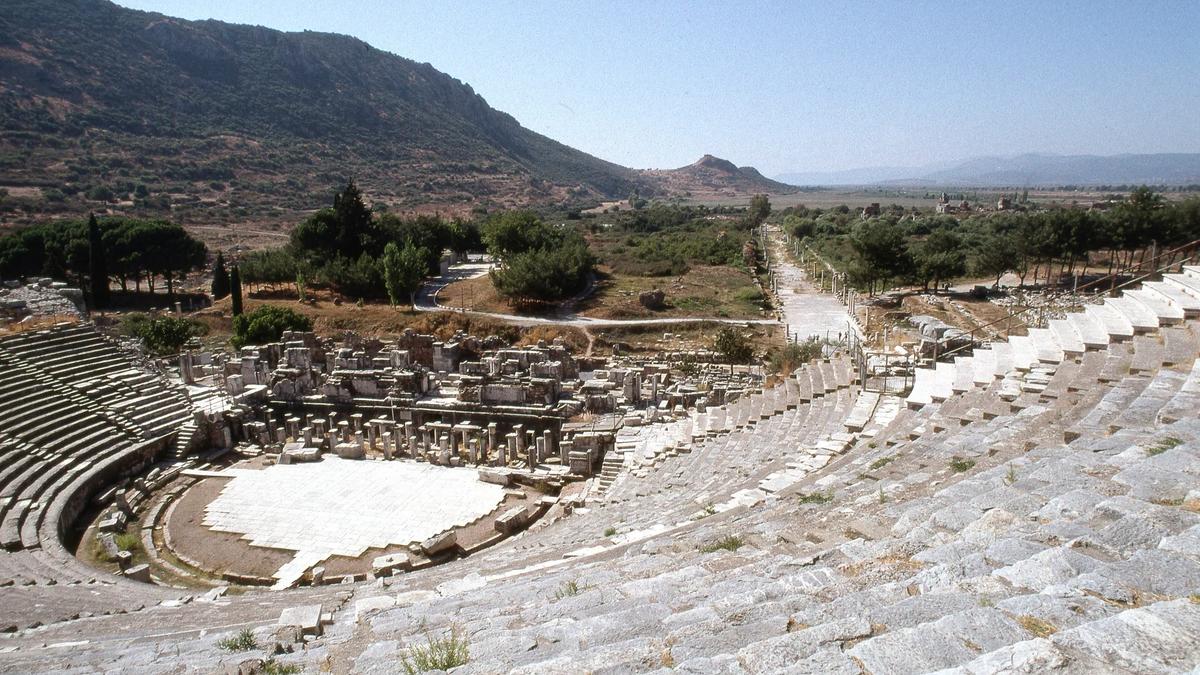
The Letter to Ephesus: Revelation 2:1-7
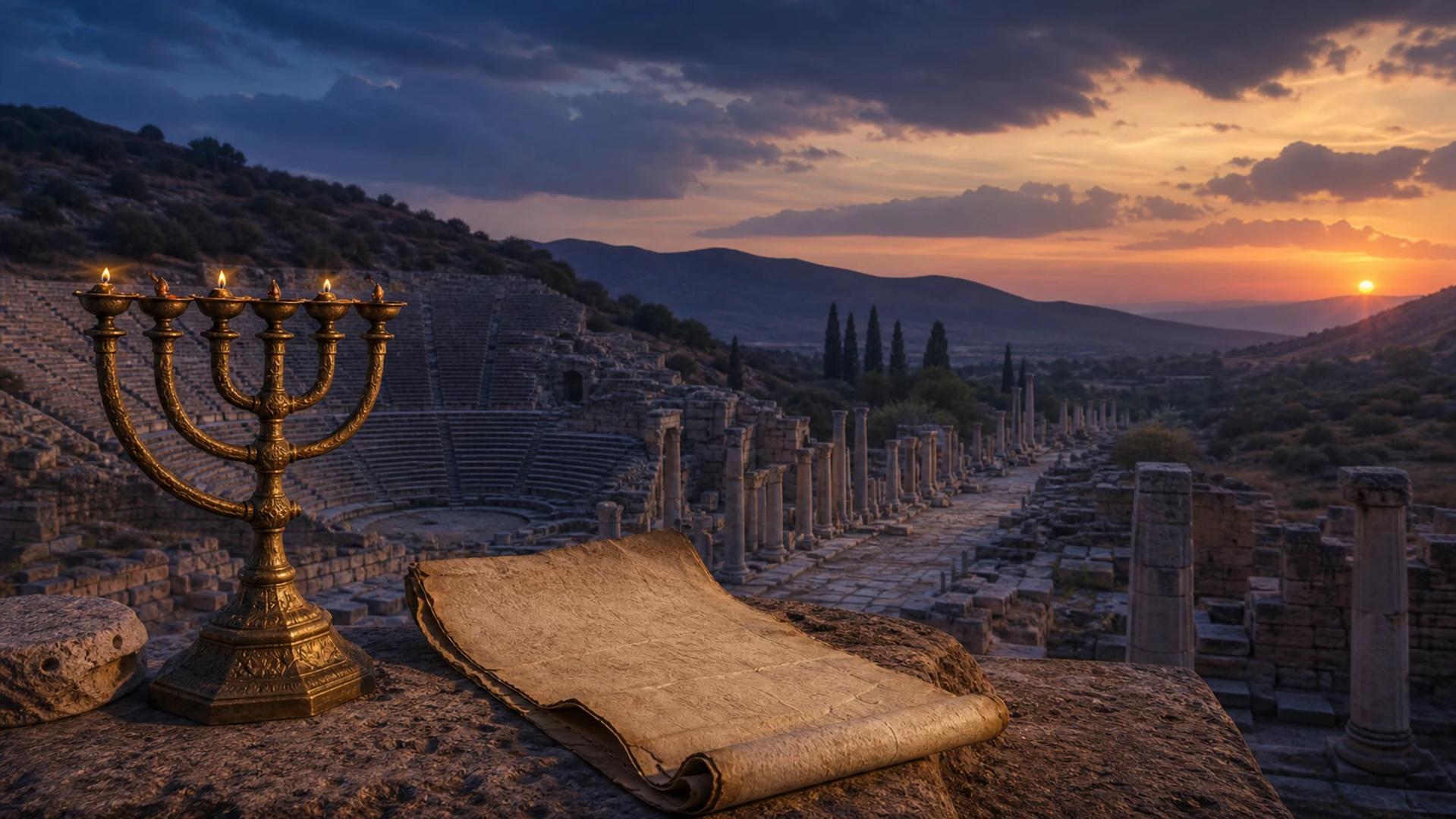
The letter is addressed "to the angel of the church in Ephesus" and presents Christ as "him who holds the seven stars in his right hand and walks among the seven golden lampstands," an image that ties it to the vision of chapter 1, where the lampstands are the seven churches.
It praises the church for specific things: "I know your deeds, your hard work and your perseverance. I know that you cannot tolerate wicked people, that you have tested those who claim to be apostles but are not, and have found them false" (Revelation 2:2, NIV). Later it adds: "You hate the practices of the Nicolaitans, which I also hate." The Nicolaitans were a group whose teaching apparently allowed compromise with pagan practice. The Ephesian church had held a firm line and had not been taken in by false teachers.
Then comes the turn: "Yet I hold this against you: You have forsaken the love you had at first." The warning is severe: "Repent and do the things you did at first. If you do not repent, I will come to you and remove your lampstand from its place," an image of the church losing its place and witness altogether. The letter closes with a promise: "To the one who is victorious, I will give the right to eat from the tree of life, which is in the paradise of God," an echo of Eden and of the tree of life in Revelation's final vision (22:2).
What "the Love You Had at First" Means
The phrase is one of the most quoted lines in Revelation, often applied loosely to any fading of enthusiasm. In context the letter responds to a specific pattern: a church that had become vigilant, disciplined and correct in doctrine while losing the love that had first marked it.
Many interpreters compare it with Paul's letter to the Ephesians, traditionally dated to his imprisonment around AD 60-62 (many scholars think a follower of Paul wrote it somewhat later). That letter is full of love: Paul gives thanks for their "faith in the Lord Jesus" and their "love for all God's people" (Ephesians 1:15) and urges them to "walk in the way of love" (5:2). By John's time the same church is praised for its discernment and its labour, but love is the thing missing. Read side by side, the two letters suggest what "first love" meant: not a feeling, but love for God and for one another that had hardened into correct but cold church life. Our article on Ephesians and Revelation's letter to Ephesus compares them in detail.
There is an irony here. The qualities the letter praises, hard work, perseverance and doctrinal vigilance, are the ones a mature church naturally develops over decades. The letter is not describing a church that failed to grow up. It describes a church that grew up well in every visible respect and lost something none of that growth could replace.
Paul's Three Years in Ephesus: Acts 19
To understand why Ephesus mattered enough to receive the first letter, go back about forty years before Revelation to Paul's own ministry in the city, recorded in Acts 19.
Paul arrived in Ephesus on his third missionary journey and stayed about three years (Acts 20:31), longer than in any other city on his journeys. When the synagogue turned against him, "he took the disciples with him and had discussions daily in the lecture hall of Tyrannus" (Acts 19:9). "This went on for two years, so that all the Jews and Greeks who lived in the province of Asia heard the word of the Lord." That suggests Ephesus worked as a hub from which the gospel spread through the province, perhaps to some of the other six cities that later received letters. No building has been identified as the lecture hall. Our article on Paul in Ephesus follows those years step by step.
Acts 19 also records dramatic events: Jewish exorcists who tried to drive out spirits "in the name of the Jesus whom Paul preaches" and failed, a public burning of books of magic, and an impact large enough to cause an economic backlash, which leads to the chapter's most famous episode.
The Riot of the Silversmiths and the Cult of Artemis
Ephesus was home to the Temple of Artemis, one of the Seven Wonders of the ancient world, and the cult of Artemis was central to the city's identity and economy. Acts 19:23-41 describes a riot started by a silversmith named Demetrius, who made silver shrines of Artemis. He warned his fellow craftsmen that "this fellow Paul has convinced and led astray large numbers of people here in Ephesus and in practically the whole province of Asia. He says that gods made by human hands are no gods at all." See our Temple of Artemis guide for what survives of the temple.
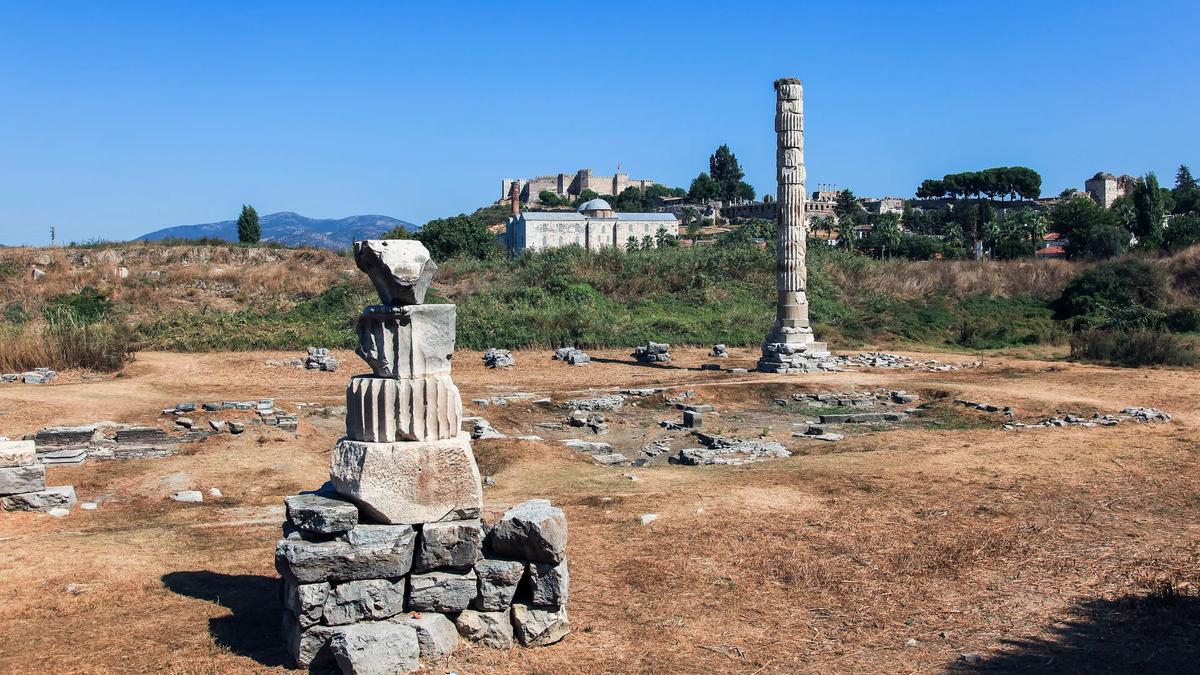
The uproar filled the Great Theatre, where the crowd shouted "Great is Artemis of the Ephesians!" for about two hours, until the city clerk calmed them by pointing out that no formal charge had been brought and that grievances belonged in the courts. The episode is the clearest evidence in the New Testament of how the early church's growth threatened the commercial and religious life of a major Roman city.
The scale of the reaction also shows how much had already changed. A riot that filled the theatre did not break out over a handful of converts meeting quietly. Demetrius's complaint implies the new movement had already hurt the trade in shrines across the province, which matches Acts' own statement that "all the Jews and Greeks who lived in the province of Asia heard the word of the Lord."
From Paul's Church to John's Rebuke: What Changed
Reading Acts 19 and Revelation 2 together gives a rare thing: a before-and-after view of the same congregation across about four decades. Paul left behind a church proven under pressure, tested by riot and economic threat and taught daily for years. By John's time that church was still sound in doctrine and still working hard, but the letter's central complaint is that something essential had cooled.
Early church tradition places the Apostle John in Ephesus later in his life and his tomb on the hill of Ayasuluk, where the Basilica of St. John was later built; a later tradition links the House of the Virgin Mary nearby with his care for Mary. In the centuries that followed, Ephesus remained a leading church, and in 431 it hosted the Council of Ephesus, which upheld Mary's title Mother of God.
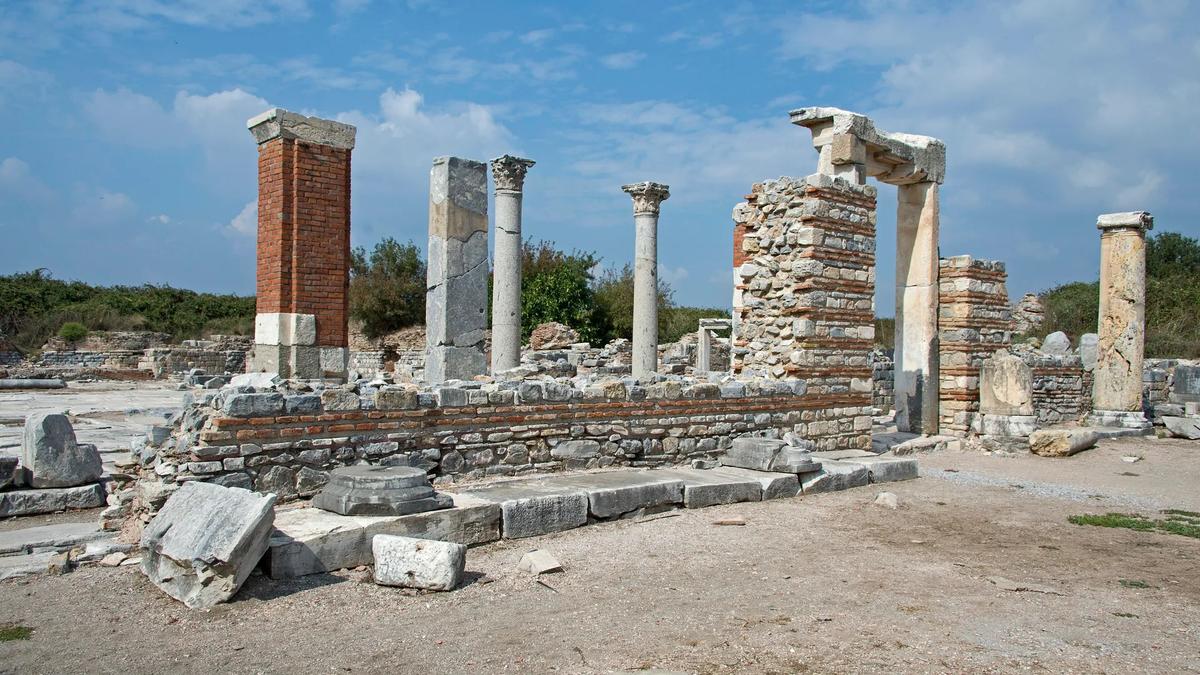
Visiting Biblical Ephesus Today
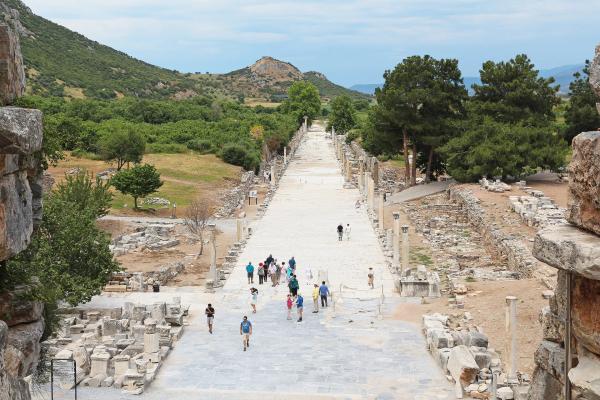
The archaeological site of Ephesus, next to Selçuk, preserves the city Paul and the later Ephesian congregation knew: the Great Theatre where the silversmiths' riot took place, the colonnaded Arcadian Street that led to the harbour (now silted up and far inland), and the streets and houses of the Roman city. In 2026 a ticket for the ancient city costs €40, and the Terrace Houses inside it €15; the Basilica of St. John in Selçuk costs €6. Current prices and hours are on our Ephesus entrance fee guide.
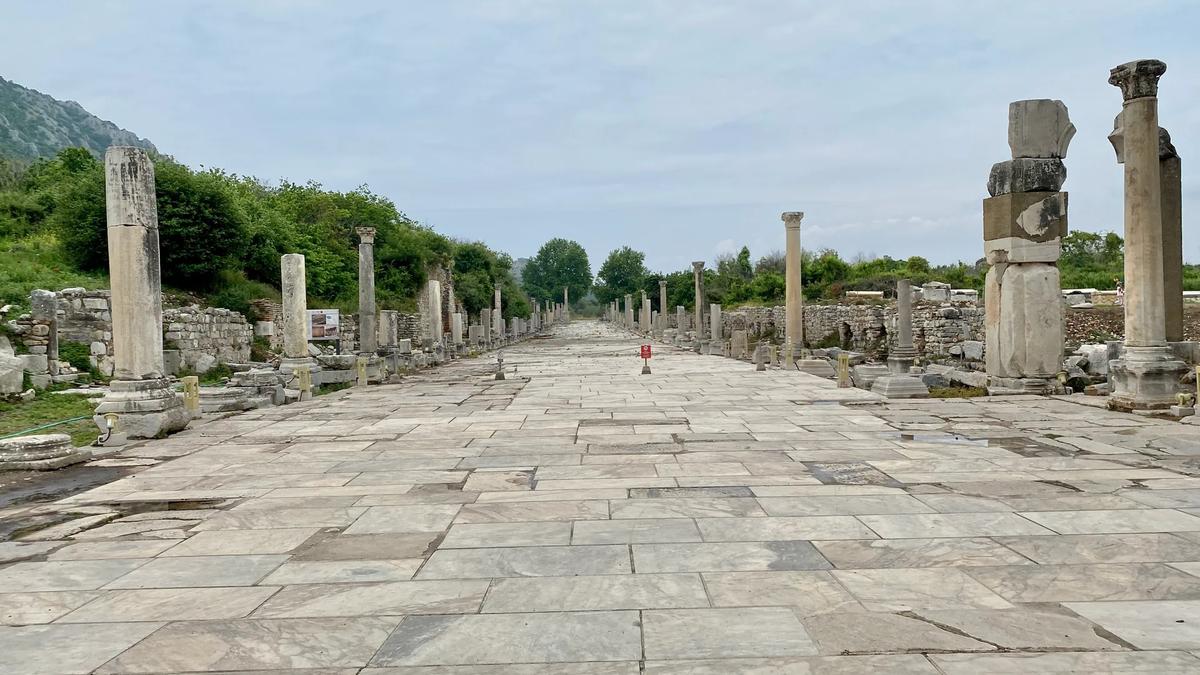
Ephesus is the first city in Revelation's order and the easiest of the seven to reach: about 25 minutes by road from Kuşadası cruise port and an hour south of Izmir. Our map of the seven churches shows where the other six lie.
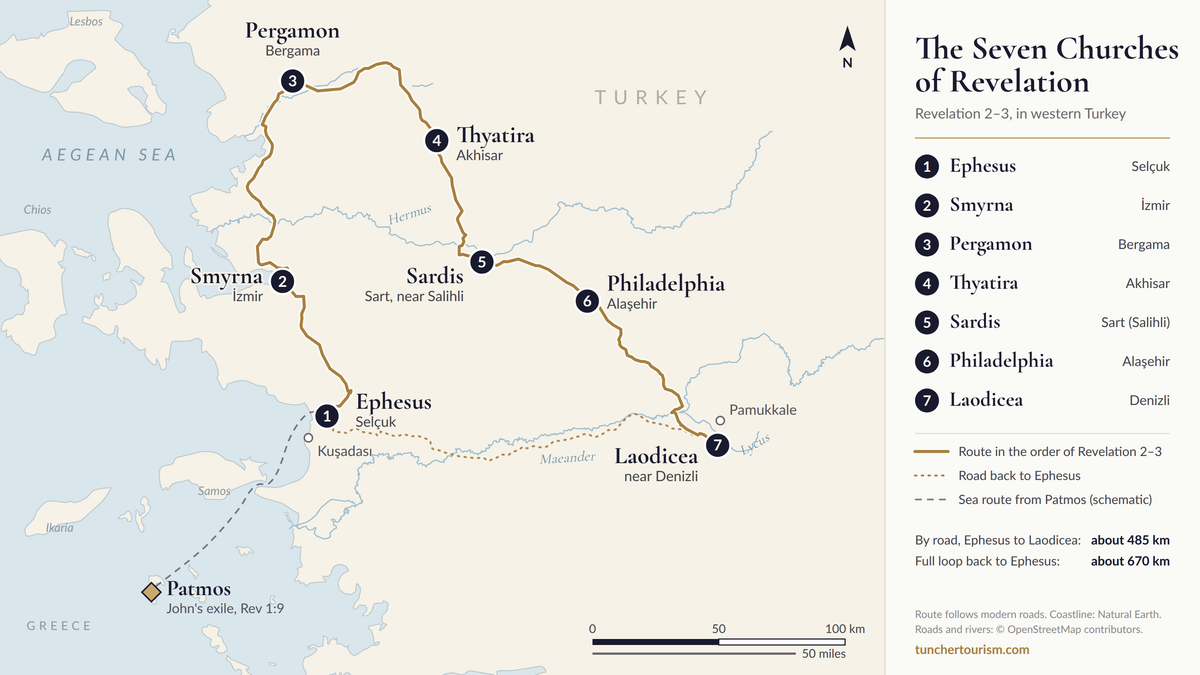
Ephesus can be seen in a day, together with the Basilica of St. John and the House of the Virgin Mary; see our Ephesus and House of the Virgin Mary pilgrimage tours. To follow the whole route, our four-day Seven Churches tour begins at Ephesus. The next stop north is Smyrna, modern Izmir, one of the two letters with no rebuke at all.
Frequently Asked Questions
Where did the church of Ephesus meet, and where is the site today?
Like other first-century churches, the Ephesian believers met in homes. Paul also taught daily for two years in the lecture hall of Tyrannus (Acts 19:9-10), but that building has never been identified. The city survives as the ruins of Ephesus next to Selçuk, Turkey, including the Great Theatre where the silversmiths' riot took place.
What did Jesus say to the church in Ephesus?
He praised its hard work, its perseverance, its testing of false apostles and its hatred of the practices of the Nicolaitans, then said, "You have forsaken the love you had at first," and called it to repent or lose its lampstand. To the one who is victorious he promised the right to eat from the tree of life (Revelation 2:1-7).
What does "first love" mean in Revelation 2:4?
The NIV wording is "You have forsaken the love you had at first." The letter targets a church that had grown vigilant and hardworking while losing the love that had marked it under Paul. Paul's letter to the Ephesians gives thanks for their "love for all God's people"; by John's time that was what had faded.
Who were the Nicolaitans?
A group named in the letters to Ephesus and Pergamon. Revelation does not describe their teaching, but in the Pergamon letter they are mentioned next to the teaching of Balaam, which led people to eat food sacrificed to idols and commit sexual immorality, so most readers take them as advocates of compromise with pagan religious life.
What was the riot of the silversmiths in Ephesus?
A silversmith named Demetrius, whose trade in silver shrines of Artemis was threatened by Paul's preaching that "gods made by human hands are no gods at all," stirred up a crowd that filled the Great Theatre. They shouted "Great is Artemis of the Ephesians!" for about two hours until the city clerk calmed them (Acts 19:23-41).
What happened to the church of Ephesus?
It remained one of the leading churches of the eastern Mediterranean for centuries. Tradition places John's last years and tomb there, and the Council of Ephesus met in the city in 431. As the harbour silted up, the town moved to the hill of Ayasuluk around the Basilica of St. John, today's Selçuk.
Is the church of Ephesus still standing?
The first-century congregation met in homes, and none of its meeting places survives. Later church buildings do: the Church of Mary inside the ancient city and the Basilica of St. John in Selçuk can both be visited.
Visit all Seven Churches with a historian
A four-day private tour of Ephesus, Smyrna, Pergamon, Thyatira, Sardis, Philadelphia and Laodicea, for groups of up to 15.
See the Seven Churches tour →Starting in Izmir? See the tour from Izmir