
Short answer: The church of Sardis was the Christian congregation in Sardis, the old capital of Lydia, whose ruins lie at the village of Sart near Salihli in Manisa province, western Turkey, about 90 km east of Izmir. Revelation 3:1-6 tells it: "you have a reputation of being alive, but you are dead," and warns that Christ will "come like a thief." Today you can see the Temple of Artemis with a small 4th-century church beside it, a huge Roman bath-gymnasium and one of the largest ancient synagogues ever found.
The church of Sardis receives one of the shortest letters in Revelation, and one of the bluntest. There is no persecution, no named false teacher, no list of rival doctrines. The letter simply says the church has a reputation for being alive and that the reputation is false. For a city with Sardis's history, that charge carried a weight its first readers would have recognized.
This article covers Revelation 3:1-6, what its central image means, how Sardis's own past gives the rebuke its edge, what became of the church, and what you can see at the site today. It is part of our Seven Churches of Revelation guide.
The Letter to Sardis: Revelation 3:1-6
The letter is addressed "to the angel of the church in Sardis" and presents Christ as the one "who holds the seven spirits of God and the seven stars." Its opening verdict is the most direct of the seven: "I know your deeds; you have a reputation of being alive, but you are dead" (Revelation 3:1, NIV).
The church is told to "Wake up! Strengthen what remains and is about to die, for I have found your deeds unfinished in the sight of my God." That suggests decline rather than total collapse: some life is left, but it is fading. If the church does not wake up, Christ warns, "I will come like a thief, and you will not know at what time I will come to you." As the rest of this article explains, a Sardian reader would have found that image uncomfortably familiar.
There is one note of praise: "Yet you have a few people in Sardis who have not soiled their clothes. They will walk with me, dressed in white, for they are worthy." The letter ends with a promise: "The one who is victorious will, like them, be dressed in white. I will never blot out the name of that person from the book of life, but will acknowledge that name before my Father and his angels."
What "Alive in Name, Dead in Fact" Means
Pergamon's and Thyatira's letters answer specific false teaching. The rebuke to Sardis is about appearance and reality. The church evidently had a good name, perhaps for its activity or its size, that did not match its real condition. It looked secure. It was not.
That was exactly the trap the city of Sardis had fallen into in its own history, and readers who knew the city would hardly have missed the parallel.
The command "wake up" translates a Greek verb that also means to keep watch, the language of a sentry on duty. For Sardis that had a military ring. Its two most famous defeats came from a failure of vigilance, not of strength.
A City That Fell Twice by Surprise: Sardis's History
Centuries before Revelation, Sardis was the capital of the Lydian kingdom, one of the wealthiest states of the ancient world. Its last king, Croesus, became a byword for wealth ("rich as Croesus"), and gold was washed from the Pactolus stream that ran through the city. Sardis was protected by a steep citadel on a spur of Mount Tmolus that its defenders believed could not be taken.
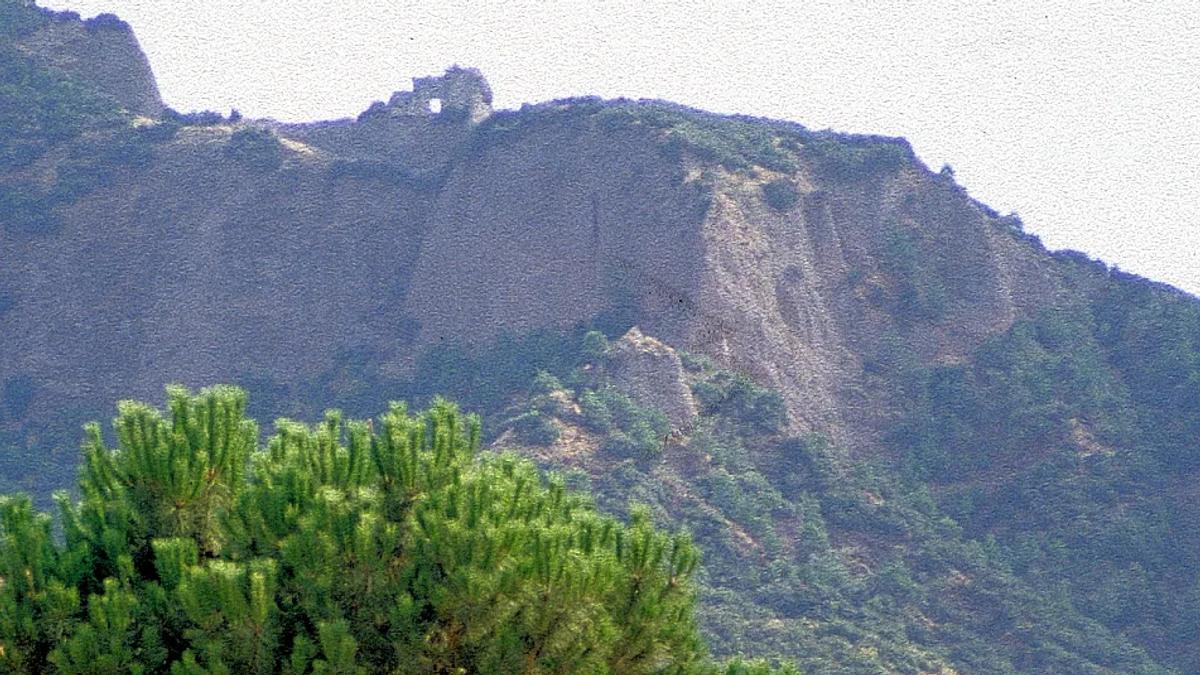
Around 547 BC the Persian king Cyrus the Great besieged Sardis. According to Herodotus, a Persian soldier named Hyroeades had watched a Lydian climb down the cliff to fetch a fallen helmet and climb back up. He followed the same route at a place "where no guards were ever set," because the rock seemed too steep to climb, other Persians came after him, and the city was taken.
About 330 years later it happened again. Around 214 BC, during the siege by the Seleucid king Antiochus III, a Cretan officer named Lagoras noticed that birds rested undisturbed on one stretch of cliff and wall, so it could not be guarded. At daybreak his men climbed it with ladders, opened a gate, and the lower city fell. The historian Polybius drew the lesson: "the strongest cities are those which most easily fall into the hands of the enemy owing to the negligence of their inhabitants." The citadel itself held out for some time longer.
By the time Revelation was written, Sardis had recovered. When an earthquake devastated it in AD 17, the emperor Tiberius granted ten million sesterces and a tax exemption to rebuild, and the city prospered under Rome. But its history as a place that looked secure and fell by surprise gives the warning about Christ coming "like a thief" an unmistakable local echo.
There is one more layer. Croesus's wealth, still proverbial two and a half thousand years later, came partly from the gold-bearing sands of the Pactolus, which legend linked to King Midas washing away his golden touch. A city whose name meant riches, and which was taken through carelessness rather than weakness, makes a pointed setting for a letter about the gap between reputation and reality.
The Few Who Have Not Soiled Their Clothes
Even in this severe letter, Sardis receives one commendation: "a few people" who "have not soiled their clothes" and will walk with Christ "dressed in white." White clothing runs through Revelation as a sign of purity and victory. Here it draws a line inside the congregation, between a complacent majority and a faithful few in the same church. The promise that Christ will "acknowledge that name before my Father and his angels" shows that even a church called dead can hold faith worth naming.
What Became of the Church of Sardis
The church survived the letter. In the later 2nd century its bishop, Melito of Sardis, was one of the leading Christian writers of his day. He addressed a defence of Christianity to the emperor Marcus Aurelius, drew up the earliest surviving Christian list of the books of the Old Testament, and wrote a sermon, On the Passover, rediscovered only in the 20th century. Around AD 190 Polycrates, bishop of Ephesus, wrote that Melito lay buried at Sardis.
When Lydia became a separate province in AD 295, Sardis was the seat of its metropolitan bishop. The earliest church building found at Sardis is the small 4th-century chapel, known as Church M, built at one corner of the Temple of Artemis; a larger basilica, Church EA, stood nearby in the Pactolus valley.
Sardis's Ruins Today: Temple of Artemis and the Synagogue
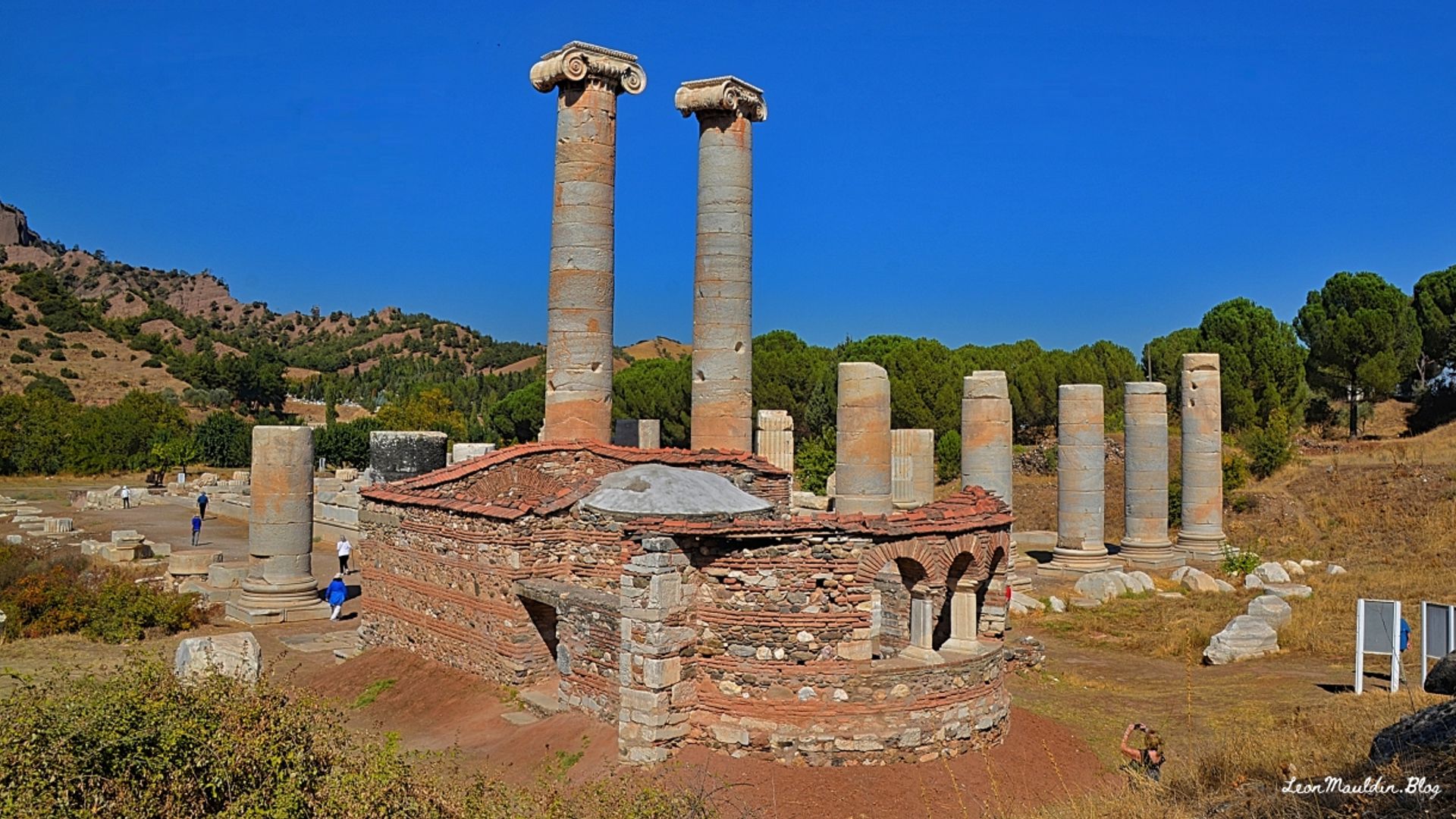
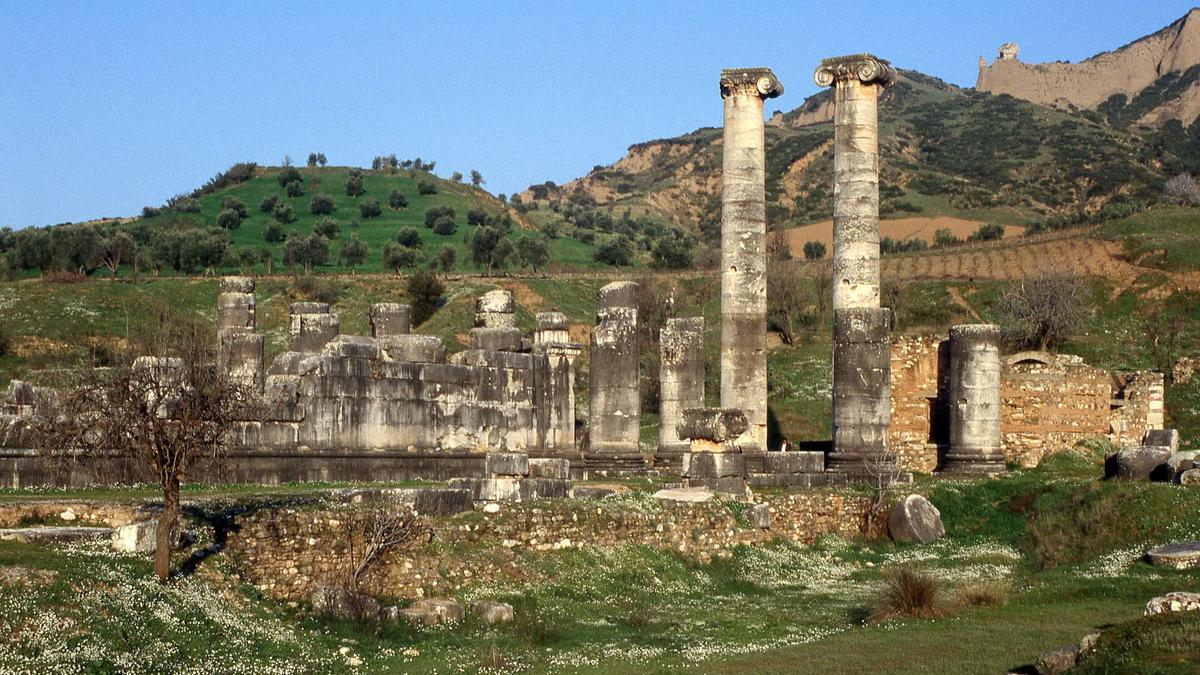
The archaeological site, by the village of Sart, has remains from across the city's long history. The Temple of Artemis, a huge Ionic temple of the Hellenistic period, stands below the acropolis near the Pactolus; several of its columns are still upright, and the little brick Church M sits at its corner.
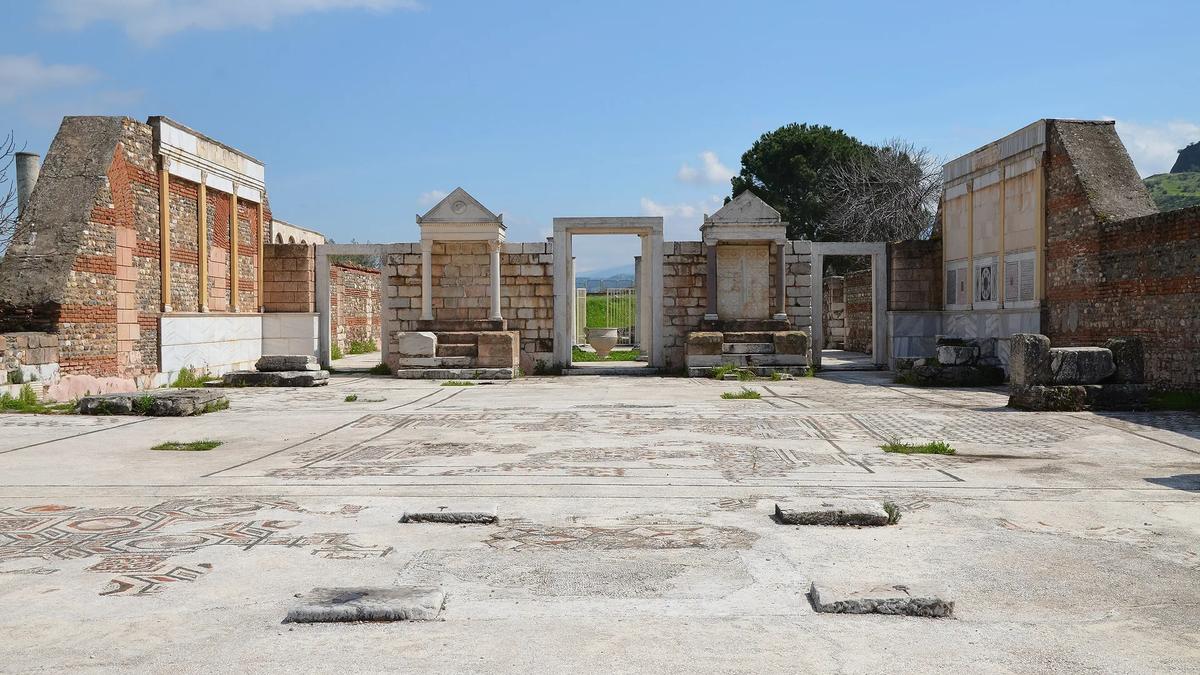
By the main road stands the Roman bath-gymnasium complex of the late 2nd and early 3rd century, whose two-storey Marble Court has been partly rebuilt. Built into the same complex is the synagogue, a long hall with mosaic floors and an apse, large enough to hold nearly a thousand people. Archaeologists from Harvard and Cornell found it in 1962.
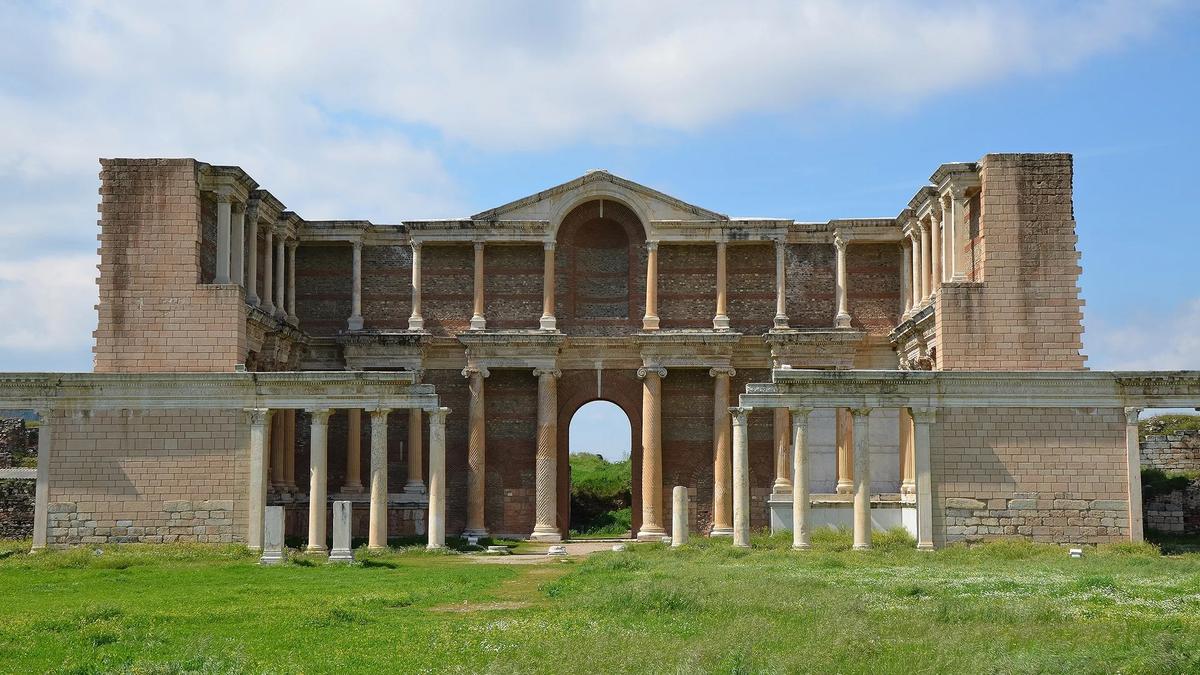
The synagogue in its excavated form dates from the late 3rd or 4th century, well after Revelation, but Jews had lived at Sardis since the 3rd century BC, and the historian Josephus quotes a Roman decree of about 50 BC confirming their right to their own assembly. The building shows a large, well-established Jewish community at the heart of the Roman city.
Visiting Sardis
Sardis lies in the Hermus (Gediz) valley about 90 km (55 miles) east of Izmir by road, and about 125 km from Ephesus. It is usually visited on an inland route that also takes in Pergamon, Thyatira, Philadelphia and Laodicea. From Thyatira it is about an hour by road, and Philadelphia is 40 minutes farther east. Our map of the seven churches shows the route.
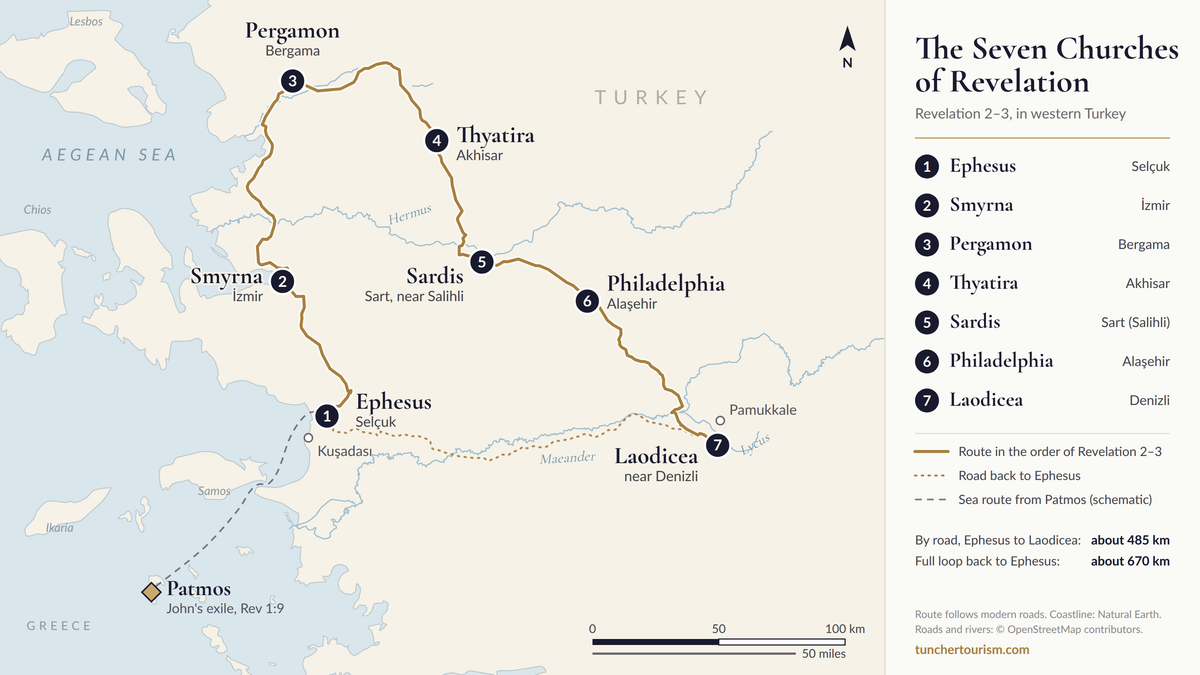
The site is in two parts a short distance apart: the bath-gymnasium and synagogue by the main road, and the Temple of Artemis up the Pactolus valley to the south. See both. The temple shows the scale of the city's pagan worship and its first church; the gymnasium and synagogue show the Roman city that the letter's readers lived in.
Sardis pairs naturally with Thyatira on the inland leg. Our three-day pilgrimage covers both, along with Ephesus, Smyrna and Pergamon, in the order Revelation addresses them. Our four-day Seven Churches tour visits Sardis and Philadelphia on the third day; it also runs from Izmir.
Frequently Asked Questions
Where is the church of Sardis located today?
Ancient Sardis lies at the village of Sart, near the town of Salihli in Manisa province, western Turkey, about 90 km east of Izmir. The first-century congregation no longer exists, but you can visit the city's ruins and the small 4th-century church beside the Temple of Artemis.
What is Sardis called today?
The ruins are at Sart, a village whose name preserves the ancient one. The nearest town is Salihli. Sardis is in Turkey.
What does "alive in name, dead in fact" mean?
It sums up Christ's verdict in Revelation 3:1: "you have a reputation of being alive, but you are dead." The church looked healthy from outside, but its real condition did not match, the same gap between appearance and reality that had twice let enemies into the city.
What was the church of Sardis known for?
For a good reputation it did not deserve. Revelation does not accuse it of false teaching or describe persecution; it says its deeds were "unfinished" and its life only apparent, while praising "a few people" who had "not soiled their clothes."
Why did Sardis fall by surprise twice in its history?
Because its defenders trusted the steepness of their cliffs. Around 547 BC Persian soldiers climbed an unguarded part of the citadel and took the city for Cyrus the Great, and around 214 BC the troops of Antiochus III climbed an unwatched stretch of cliff at daybreak and took the lower city.
What happened to the city of Sardis?
It stayed an important city under Rome, rebuilt with imperial help after an earthquake in AD 17, and became the seat of a metropolitan bishop. Its ruins are now excavated by an American expedition that has worked there every year since 1958.
Is the Sardis synagogue from the time of Revelation?
No. The building as excavated dates from the late 3rd or 4th century AD. But a Jewish community lived in Sardis from the 3rd century BC, so Jews and Christians shared the city when Revelation was written.
For the stop before Sardis on the trail, see the Church of Thyatira. The next stop east is the Church of Philadelphia, one of the two letters with no rebuke at all. For the full route and planning, see the Seven Churches of Revelation guide.
Visit all Seven Churches with a historian
A four-day private tour of Ephesus, Smyrna, Pergamon, Thyatira, Sardis, Philadelphia and Laodicea, for groups of up to 15.
See the Seven Churches tour →Starting in Izmir? See the tour from Izmir