
Short answer: The church of Smyrna was the Christian congregation of ancient Smyrna, today Izmir, Turkey's third-largest city. Its letter (Revelation 2:8-11) is one of only two of the seven with no rebuke; the other is Philadelphia's. It warns of coming persecution and promises: "Be faithful, even to the point of death, and I will give you life as your victor's crown." About sixty years later Smyrna's bishop, Polycarp, was burned in the city's stadium for refusing to deny Christ. The excavated Roman agora is the main ancient site to see in Izmir.
The church of Smyrna is one of only two of the seven, with Philadelphia, to receive a letter with no criticism, only praise and a call to endure. It is also the church whose story did not end with the letter. Two generations later its own bishop became the subject of one of the earliest and most influential accounts of a Christian martyr, a real sequel to the letter's promise.
This article covers Revelation 2:8-11, what its promises mean, the martyrdom of Polycarp, and what you can see of ancient Smyrna in Izmir today. It is part of our Seven Churches of Revelation guide.
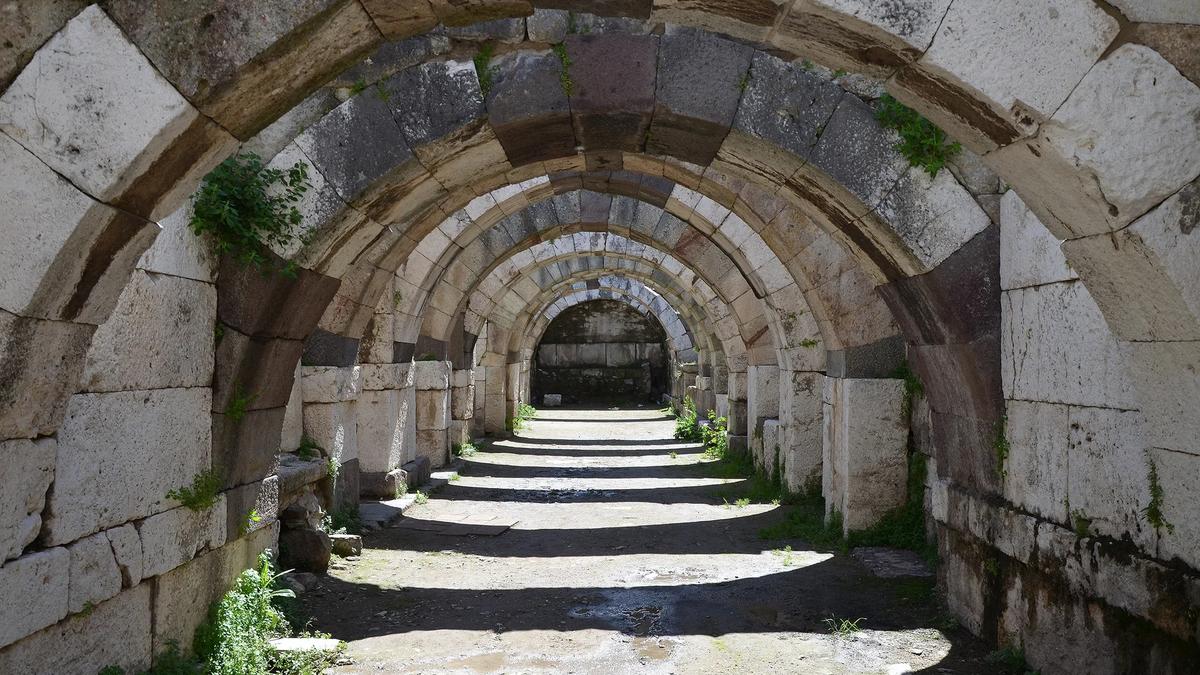
The Letter to Smyrna: Revelation 2:8-11
The letter is addressed "to the angel of the church in Smyrna" and presents Christ as "him who is the First and the Last, who died and came to life again," an opening that points to the letter's theme of suffering followed by life.
It is short and direct: "I know your afflictions and your poverty, yet you are rich! I know about the slander of those who say they are Jews and are not, but are a synagogue of Satan." Then warning and encouragement together: "Do not be afraid of what you are about to suffer. I tell you, the devil will put some of you in prison to test you, and you will suffer persecution for ten days. Be faithful, even to the point of death, and I will give you life as your victor's crown" (Revelation 2:9-10, NIV).
There is no accusation, no named heresy and no call to repent. Smyrna's only instruction is to keep doing what it is already doing, even as that faithfulness leads into suffering. Philadelphia's letter is the only other one like it.
The phrase "synagogue of Satan," which appears again in the letter to Philadelphia, is hard. Many scholars read it as reflecting a bitter local conflict between the young church and members of the city's synagogue, at a time when the two were separating; it is not a statement about Jewish people in general.
The Crown of Life and the Promise to Endure
Older English Bibles call the promise "the crown of life"; the NIV renders it "life as your victor's crown." Either way, the image is the wreath given to the winner of an athletic contest, something Smyrna's readers saw often, here given for faithfulness under persecution. The "ten days" are usually read as a limited, bounded time of trial rather than an exact count; they may echo the ten days of testing in Daniel 1:12.
The closing promise, "The one who is victorious will not be hurt at all by the second death," answers the opening title of Christ as the one "who died and came to life again." The letter is framed by death and life: Christ's at the start, the believer's at the end.
The pressure on the church had local roots. Smyrna was proud of its loyalty to Rome. When the cities of Asia competed in AD 26 to build a temple to the emperor Tiberius, Smyrna's envoys reminded the Senate that they had been the first to build a temple in honour of Rome, back in 195 BC, and the Senate chose Smyrna, as the historian Tacitus records. In a city so devoted to Rome and its emperors, Christians who refused to honour them were easy to accuse.
Polycarp: Smyrna's Faith Tested a Generation Later
What makes Smyrna's letter stand out in church history is how directly its words were lived out. Polycarp was bishop of Smyrna in the first half of the 2nd century. Irenaeus, who heard him preach as a young man, recalled Polycarp telling how he had talked with John and others who had seen the Lord.
Around AD 155, during a local persecution, Polycarp was arrested and brought into the stadium before the Roman proconsul. According to the Martyrdom of Polycarp, a letter written by the church of Smyrna soon afterwards and one of the earliest accounts of a Christian martyr after Stephen in Acts, the proconsul urged the old man: "Swear by the fortune of Caesar," "Swear, and I will set you at liberty, reproach Christ." Polycarp answered: "Eighty and six years have I served Him, and He never did me any injury: how then can I blaspheme my King and my Saviour?"
The crowd gathered wood from the shops and baths for a fire. According to the account, the flames did not consume him, and an executioner killed him with a dagger. The letter calls him the twelfth to be martyred in Smyrna, "reckoning those also of Philadelphia," so the two churches with no rebuke in Revelation shared their martyrs too.
The Martyrdom of Polycarp was copied and read across the early church as a model of how to face persecution: calm, prayerful and unwilling to buy freedom with a single act of worship to the emperor. Read beside Revelation's letter, written perhaps sixty years earlier, Polycarp's death looks like the faithfulness "even to the point of death" that the letter asked of Smyrna.
Izmir Today: The Church That Never Stopped Being a City
Of the seven cities of Revelation, Smyrna alone never became a ruin. Modern Izmir, Turkey's third-largest city, covers the ancient city, so it is the only one of the seven where you visit a living metropolis rather than an archaeological park.
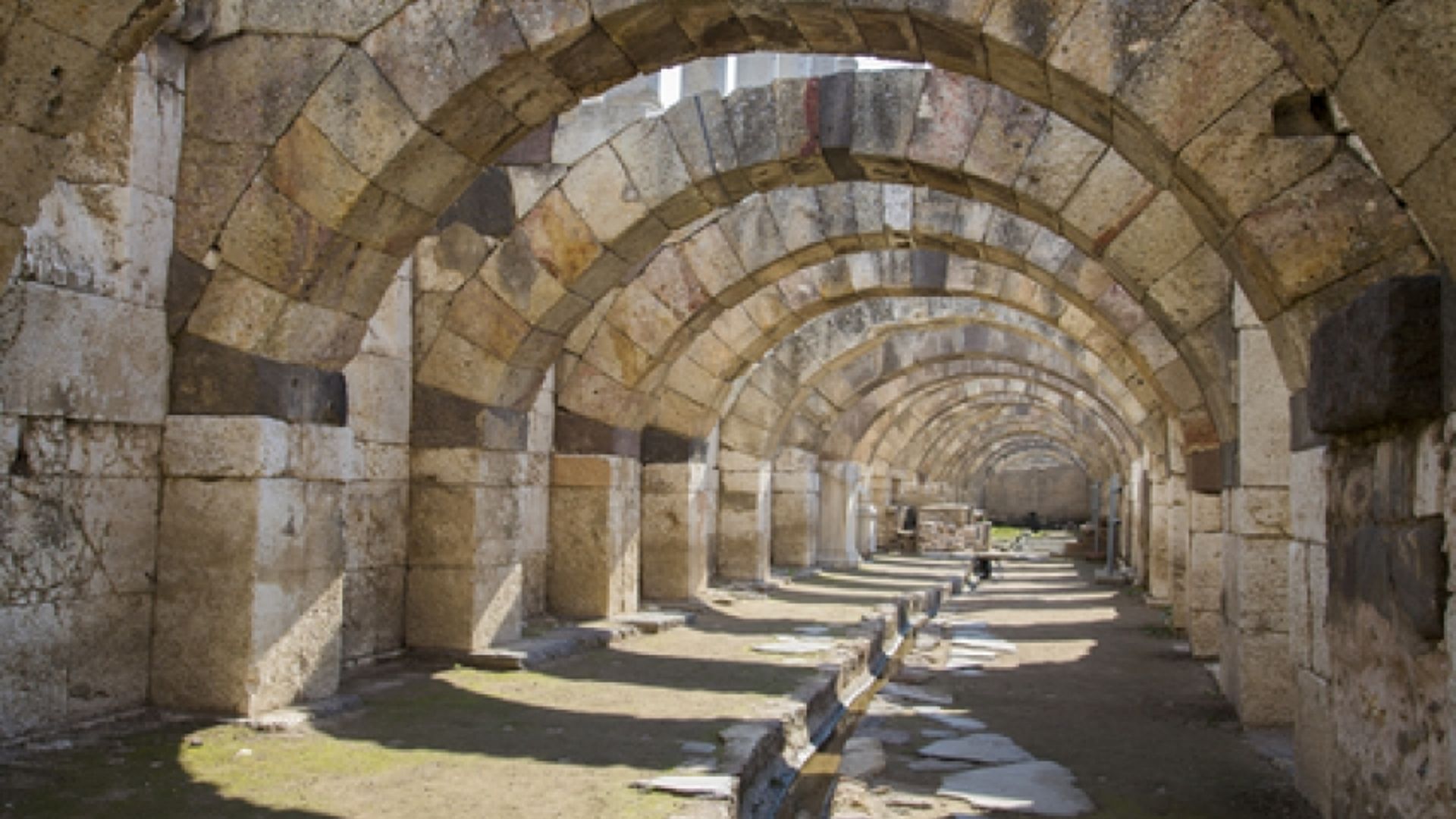
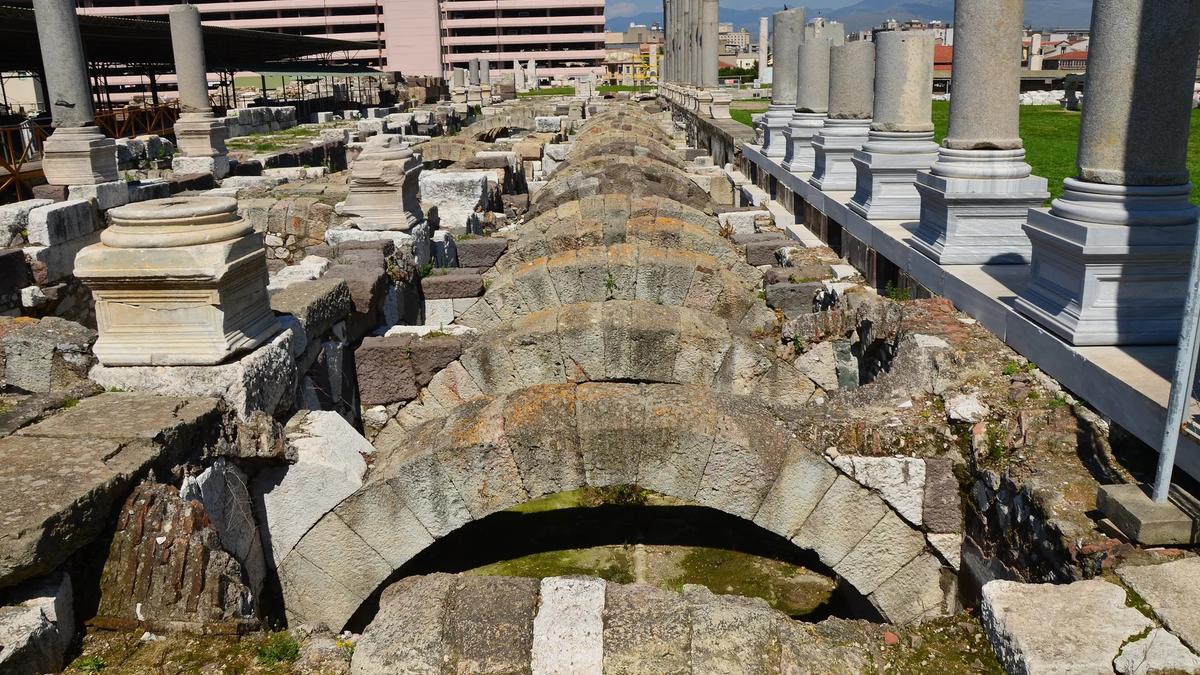
That continuity has a cost: far less of ancient Smyrna can be seen than at the other sites. The main exception is the agora, the civic and commercial heart of the Roman city on the lower slopes of Mount Pagos. It was rebuilt under Marcus Aurelius after an earthquake in AD 178, and its re-erected columns and the long vaulted basement of its basilica are open to visitors in the Konak district.
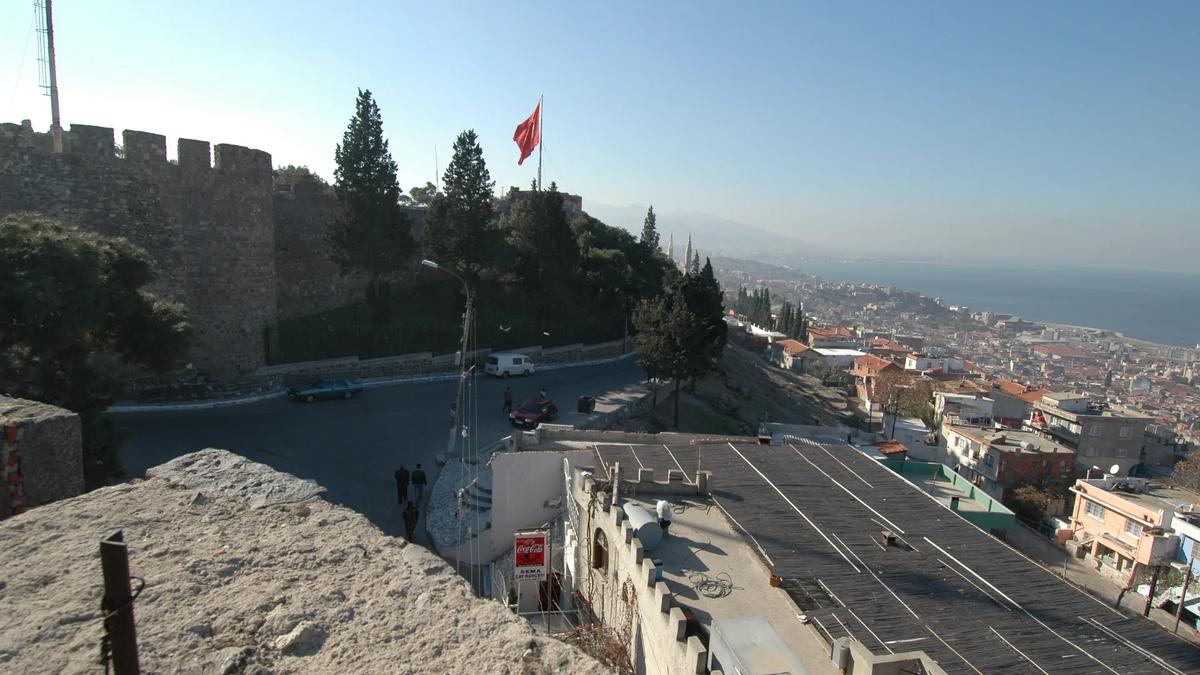
Above the agora rises Mount Pagos, today Kadifekale, where the Hellenistic city's acropolis stood; the medieval walls on top still give the best view over Izmir and its bay. The ancient stadium where Polycarp died lay on the slopes of Pagos, but nothing of it stands today, a reminder of how thoroughly a living city covers its past.
Smyrna had an older claim to fame long before Polycarp: it was the strongest of the cities that claimed Homer as their own. See Was Homer Born in Izmir?
Visiting Smyrna
Izmir is the second stop in Revelation's order, about 75 km (45 miles) and an hour by road north of Ephesus, and the gateway to the inland churches. Its airport and cruise port make it the natural start for a Seven Churches trip. Our map of the seven churches shows the route.
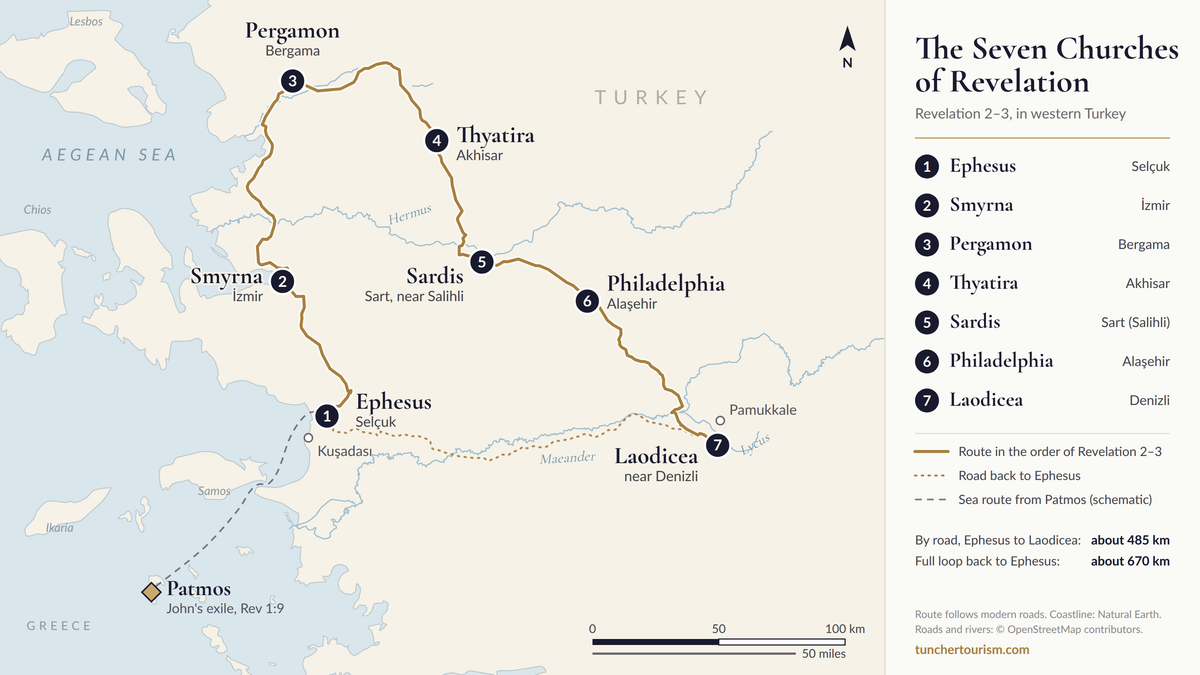
Smyrna is the one of the seven that never stopped being a city, which makes it a natural place to begin. Our four-day Seven Churches tour from Izmir starts here and works inland through Pergamon, Thyatira and Sardis; the same tour runs from Kuşadası. With less time, the two-day pilgrimage covers Ephesus, Smyrna and Pergamon.
Frequently Asked Questions
Where is the church of Smyrna located today?
Smyrna is modern Izmir, Turkey's third-largest city. It is the only one of the seven churches still a living city on the same site, so less of the ancient city survives above ground. The Roman agora, with its vaulted basement, is excavated and open to visitors.
What is Smyrna called today?
Izmir. The Turkish name comes from the Greek Smyrna, and the city's ancient center lies under the modern districts of Konak and Kadifekale.
What did Jesus say to the church in Smyrna?
He said he knew their afflictions and poverty, yet they were rich; warned that some would be imprisoned and suffer for "ten days"; and told them, "Be faithful, even to the point of death, and I will give you life as your victor's crown" (Revelation 2:8-11). There is no rebuke.
Who was Polycarp?
Polycarp was bishop of Smyrna in the first half of the 2nd century; Irenaeus says he had known John. Arrested around AD 155 and ordered to curse Christ, he replied, "Eighty and six years have I served Him, and He never did me any injury." He was condemned to the fire in the stadium of Smyrna and, according to the account of his martyrdom, killed with a dagger when the flames did not consume him.
What does the crown of life promised to Smyrna mean?
It is the victor's wreath of an athletic contest, given in Revelation for faithfulness under persecution. The NIV translates it "life as your victor's crown." The letter ties it to Christ, who "died and came to life again," and promises that the victorious "will not be hurt at all by the second death."
What is the synagogue of Satan in Revelation 2:9?
A hard phrase used in the letters to Smyrna and Philadelphia. Many scholars read it as reflecting a local conflict between the church and members of the city's synagogue who opposed it, at a time when church and synagogue were separating. It concerns a first-century dispute, not Jewish people in general.
Is Smyrna the only church with no rebuke?
No. Philadelphia's letter (Revelation 3:7-13) also has no rebuke. Smyrna and Philadelphia are the two churches Revelation only praises and encourages.
For travelers connecting Smyrna to the wider seven churches route, Izmir is both the natural second stop after Ephesus and the gateway to the inland sites. To continue the trail, see the Church of Pergamon, or go back to the Church of Ephesus and the Seven Churches of Revelation guide for the complete route.
Visit all Seven Churches with a historian
A four-day private tour of Ephesus, Smyrna, Pergamon, Thyatira, Sardis, Philadelphia and Laodicea, for groups of up to 15.
See the Seven Churches tour →Starting in Izmir? See the tour from Izmir