
Short answer: Revelation 2:13 places "Satan's throne" in Pergamon, the ancient city that is now Bergama in western Turkey, about 1.5 hours by road north of Izmir. The verse never says which building it meant. The best-known candidate, the Great Altar of Zeus, is no longer there: its marble frieze was excavated in the 1870s and 1880s and taken to Berlin, where it will be back on display when the Pergamonmuseum reopens on 4 June 2027. The altar's stone foundation is still on the acropolis above Bergama.
The church of Pergamon received a letter naming the city it lived in as the place "where Satan has his throne" (Revelation 2:13, NIV), a phrase that has caused more debate than almost any other line in Revelation 2 and 3. Pergamon was no minor town. It was one of the leading cities of the Roman province of Asia, with a famous library, a clifftop acropolis and some of the largest pagan and imperial cult sanctuaries in the region. The letter speaks to a small congregation keeping its faith in the middle of all that.
This guide covers Revelation 2:12-17, the scholarly disagreement over what "Satan's throne" referred to, where the Pergamon Altar is today, and what survives of ancient Pergamon. It is part of our Seven Churches of Revelation guide.
The Letter to Pergamon: Revelation 2:12-17
The letter begins "To the angel of the church in Pergamum write" (the NIV uses Pergamum, the Latin form of the city's name) and presents Christ as the one "who has the sharp, double-edged sword." It is an image of judgment, and it sets the tone for a letter about compromise inside the church.
Then comes the praise. "I know where you live," Christ says, "where Satan has his throne. Yet you remain true to my name. You did not renounce your faith in me, not even in the days of Antipas, my faithful witness, who was put to death in your city" (Revelation 2:13). In one sentence the letter names the city's hostility, praises the congregation's endurance, and remembers a martyr, Antipas, about whom the Bible says nothing more. His death was clearly known to the first readers.
The tone then shifts to rebuke: "Nevertheless, I have a few things against you: There are some among you who hold to the teaching of Balaam, who taught Balak to entice the Israelites to sin so that they ate food sacrificed to idols and committed sexual immorality. Likewise, you also have those who hold to the teaching of the Nicolaitans" (Revelation 2:14-15). The letter calls for repentance and warns that otherwise Christ "will fight against them with the sword of my mouth." It closes with a promise: to the one who is victorious he will give "some of the hidden manna" and "a white stone with a new name written on it, known only to the one who receives it." Commentators link the white stone to ancient customs such as white voting pebbles for acquittal or stones used as tokens of admission. The text does not say which.
What Was "Satan's Throne"? Three Theories
The Pergamon letter is unusually specific in naming a place, yet it never explains what "Satan's throne" means. Scholars have proposed three main answers, and none has been proven.
The Great Altar. Pergamon's acropolis held a massive altar, probably dedicated to Zeus and Athena, decorated with a frieze of the battle between the Olympian gods and the Giants. It stood high on the hillside, visible from the city below, which made it a natural candidate for an image of enthroned pagan power. Its carved panels are now in Berlin (see below).
The Asclepion. Pergamon was also home to one of the most famous healing sanctuaries of the Roman world, dedicated to Asclepius, the god of medicine, whose symbol was a serpent. Some scholars connect "Satan's throne" to this serpent imagery and to the sanctuary's prestige: the sick came from across the empire seeking healing from a pagan god, a rival to the gospel Pergamon's Christians proclaimed.
The imperial cult. Pergamon was the first city in the province of Asia to hold the official cult of the emperor, granted by Augustus, and under Trajan it became the first in the province to receive a second imperial temple. Under this theory, "Satan's throne" means the city's role as a seat of emperor worship. For Christians who refused to honour the emperor as divine, that meant living in the shadow of the empire's own claim to ultimate authority.
No single theory has full agreement, and the letter may mean the whole weight of pagan and imperial religion concentrated in Pergamon rather than one building. What is not in doubt is that Pergamon, more than almost any other of the seven cities, was crowded with monumental rivals to the young church's faith.
Pergamon also differed in kind from the other cities on the list. Ephesus had its Temple of Artemis and Smyrna its civic cults, but Pergamon was where the imperial cult of the province began, and that status was part of the city's official identity. Holding firm in the city "where Satan has his throne" meant holding firm in the one city of the seven most bound up with the kind of loyalty the church could not give.
Where Is the Pergamon Altar Today?
The Great Altar was built on Pergamon's acropolis in the 2nd century BC. Its base measured about 36 by 33 metres, and a broad staircase led up to the fire altar itself. In the 7th century AD, when the acropolis was fortified against Arab raids, the altar was pulled down and many of its carved panels were built into a defensive wall. The German engineer Carl Humann recognized the reliefs while working in the area, and from 1878 to 1886 the Berlin Museums excavated the acropolis and, under an agreement with the Ottoman government, shipped the frieze to Berlin.
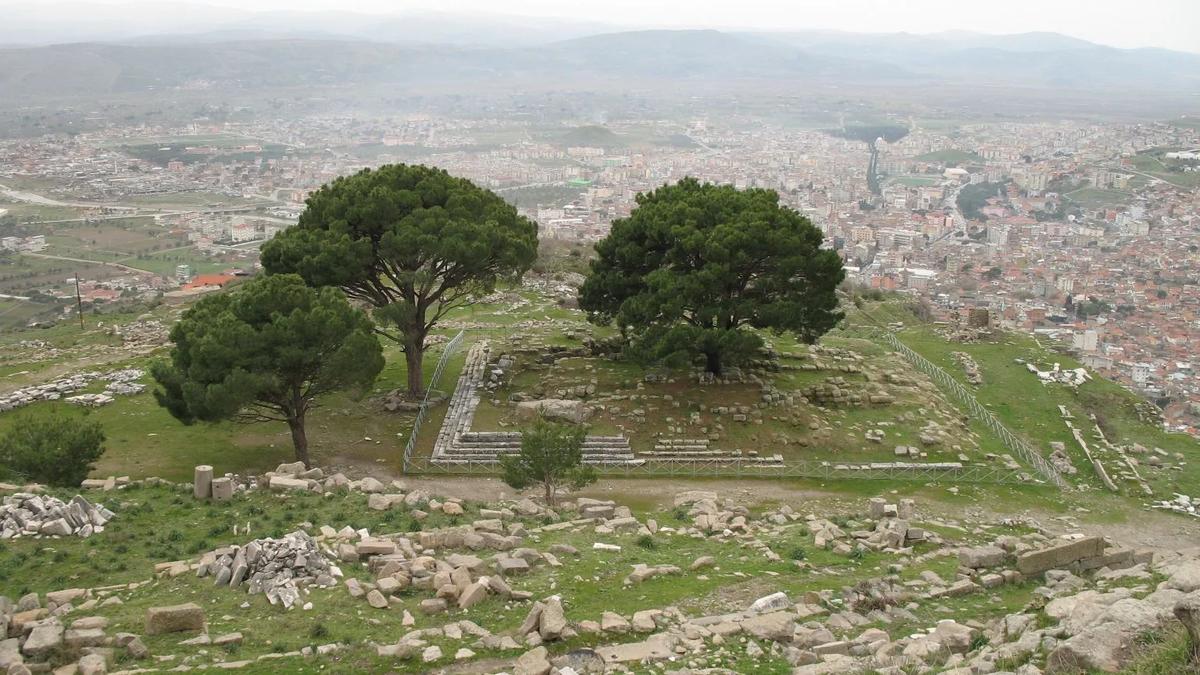
In Berlin the panels were reassembled into the altar's west front, from 1930 in the purpose-built Pergamon Museum. The frieze slabs are original marble, but much of the staircase and columns around them is modern: more than 80 percent of the famous west façade is reconstruction. So the altar in Berlin is real, but it is a rebuilt setting for the original carvings.
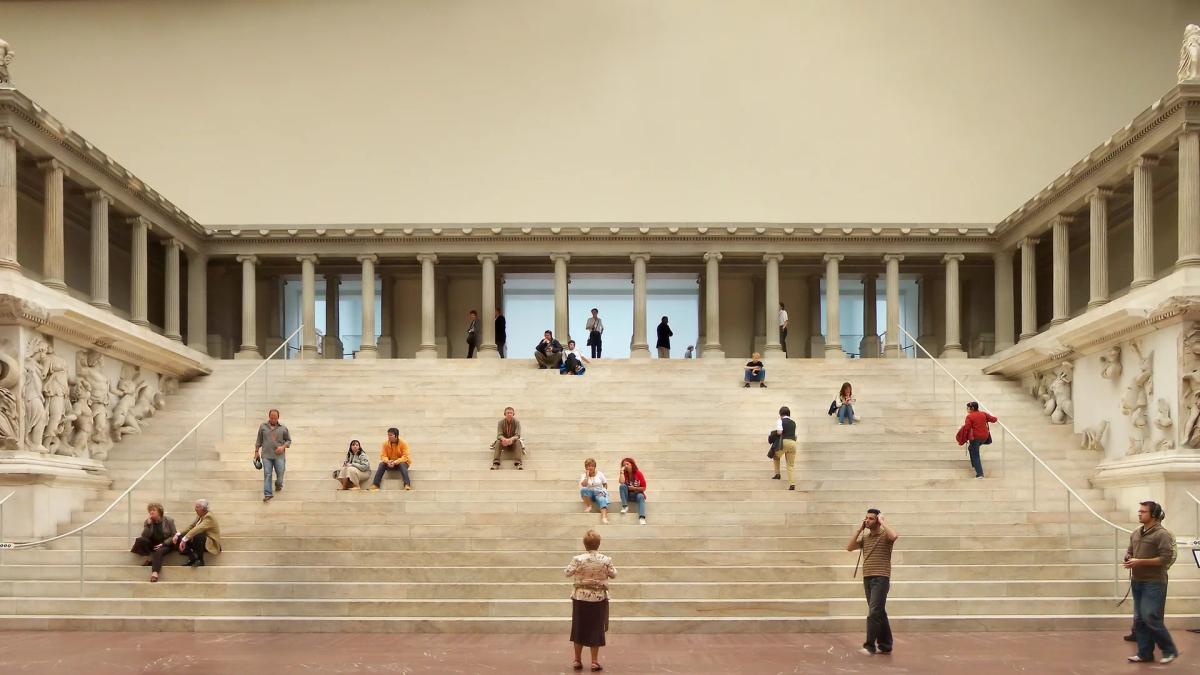
The altar hall has been closed since the end of September 2014, and the whole museum closed for renovation in October 2023. According to the Berlin State Museums, the Pergamonmuseum reopens on 4 June 2027 with the altar on display again; the museum's south wing stays closed until about 2037. Until then you can see a 360-degree panorama of ancient Pergamon by the artist Yadegar Asisi, with original sculptures from the city, in the temporary "Pergamonmuseum. Das Panorama" building on Museum Island.
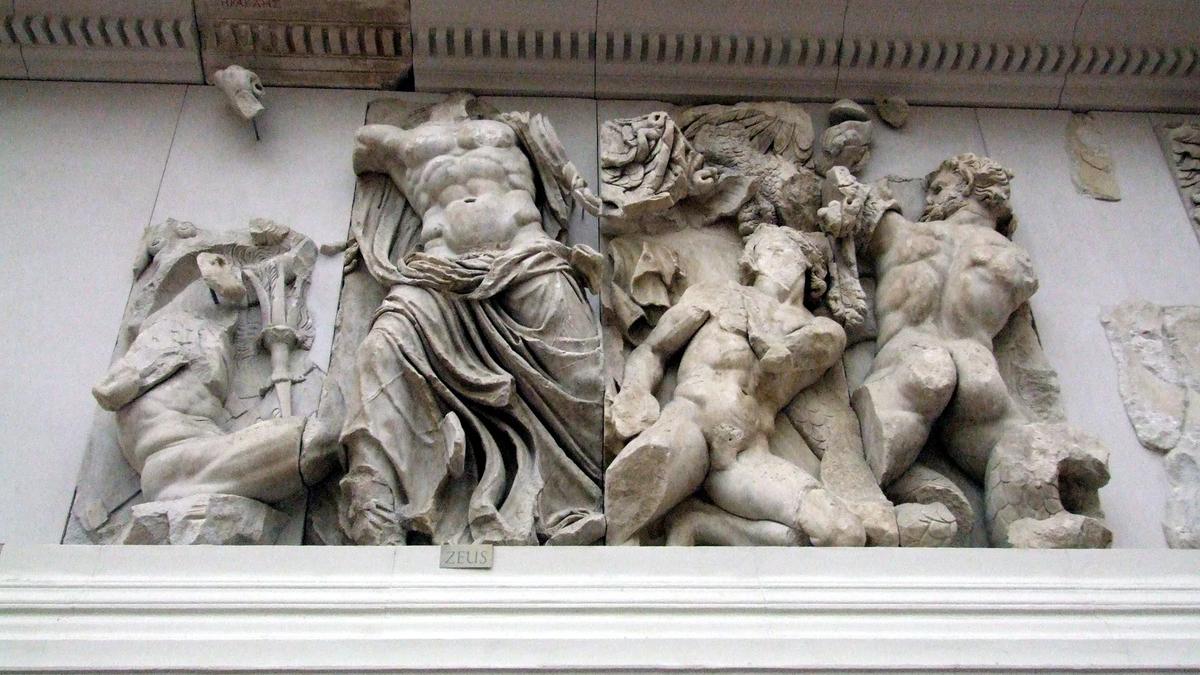
In Bergama, the altar's stone foundation is still in place on its own terrace on the acropolis, so you can stand where the building most often linked to "Satan's throne" once rose.
Inside the Letter: Balaam, Jezebel, and the Nicolaitans
The Pergamon letter names two problems inside the church: the teaching of Balaam and the teaching of the Nicolaitans. Balaam, from Numbers 22-24 and 31:16, was a non-Israelite prophet whose advice led Israel into idol feasts and sexual immorality; he did harm through counsel rather than open attack. The Nicolaitans appear by name in the letters to Ephesus and Pergamon and are usually understood as a group that allowed some accommodation with pagan civic and religious life, possibly including the feasts of the trade guilds, where meat sacrificed to idols was eaten.
Jezebel is not named in the Pergamon letter. She appears in the next one, to Thyatira (Revelation 2:20), as a woman "who calls herself a prophet" and leads believers into "sexual immorality and the eating of food sacrificed to idols." Those are the same two sins Balaam taught, which is why readers often discuss Balaam, Jezebel and the Nicolaitans together as one pattern.
Taken together, the danger to the Pergamon church was less persecution from outside, which the letter says the congregation had already withstood in Antipas's day, than teaching from inside that made compromise with the surrounding religious culture seem acceptable.
Antipas and the Cost of Faithfulness in a Roman Cult City
The letter's one historical reference, the death of Antipas, gets no further explanation in the Bible. He is the only martyr named in any of the seven letters, and the letter treats his death as recent enough to be a live memory for the congregation. Later church tradition makes him bishop of Pergamon and says he was put to death by burning inside a bronze bull. The Orthodox and Catholic churches remember him on 11 April. These details come from tradition, not from Revelation.
Pergamon's Acropolis and Red Basilica Today
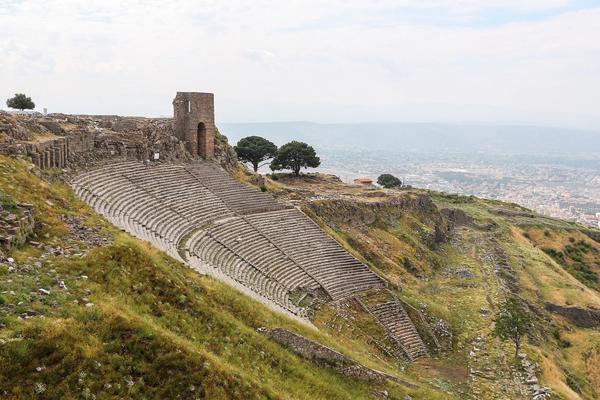
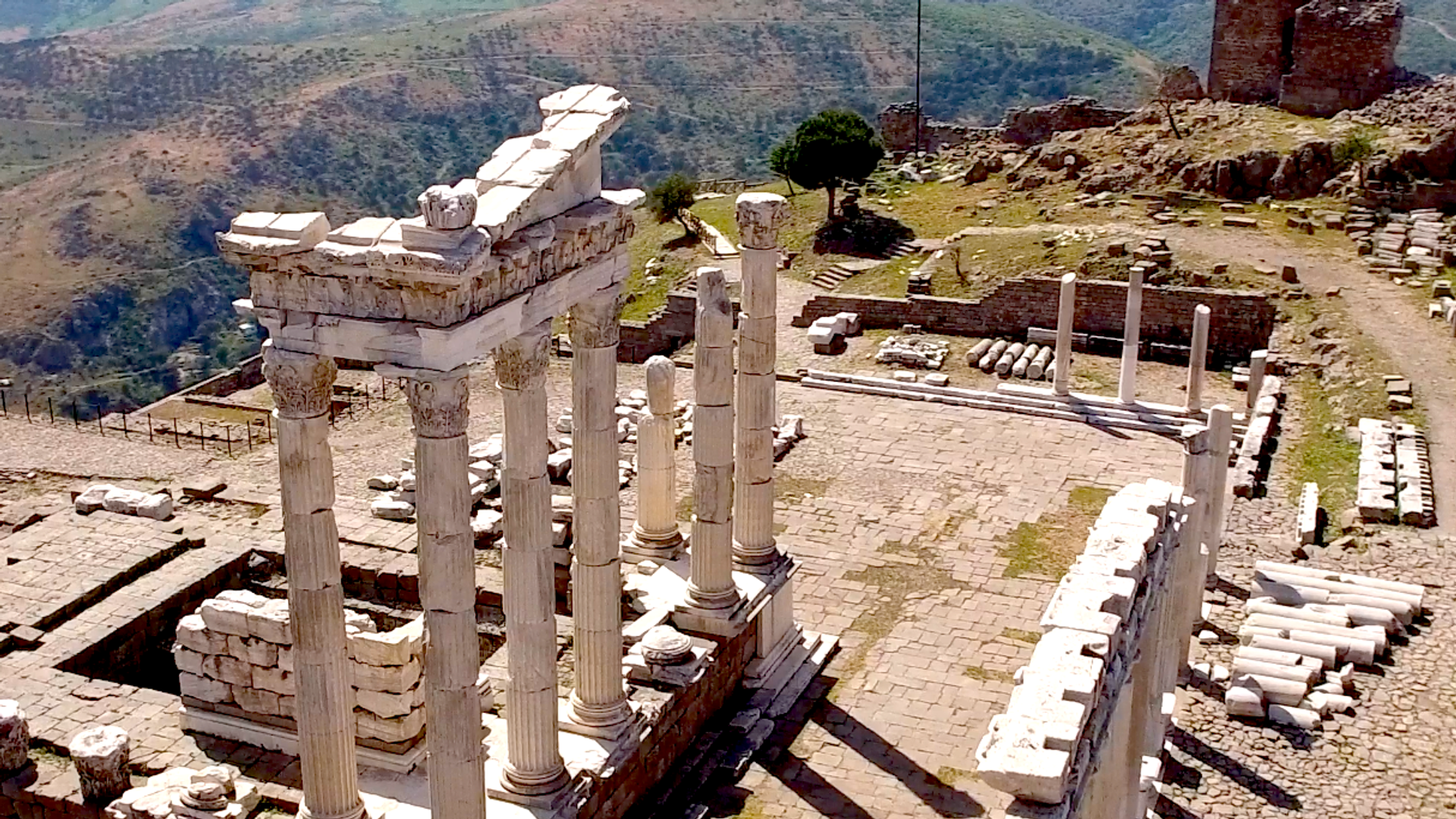
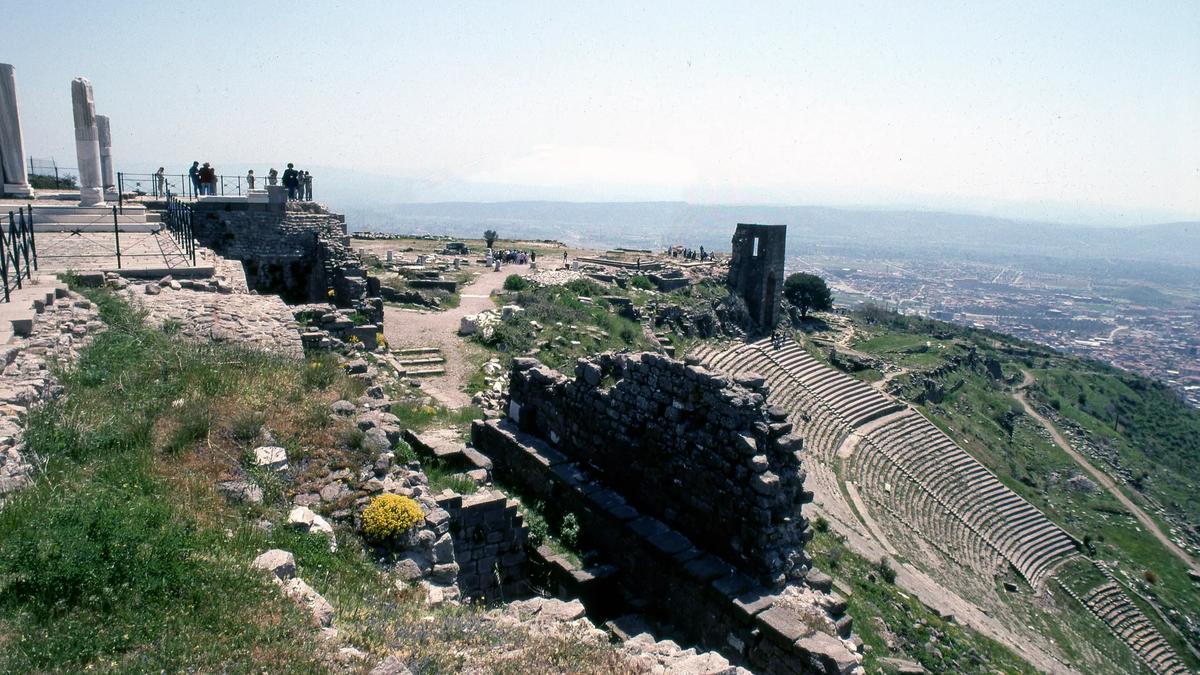
The site of ancient Pergamon is dominated by its acropolis, a steep hill above the modern town of Bergama, reached today by cable car. On top you can see the Temple of Trajan, the terraces of the Sanctuary of Athena, where the famous library is thought to have stood, the foundation of the Great Altar and the theatre. The theatre held about 10,000 people in 78 rows of seats cut into the hillside, and it is the steepest of all ancient theatres. From the top row the view drops straight down to the plain.
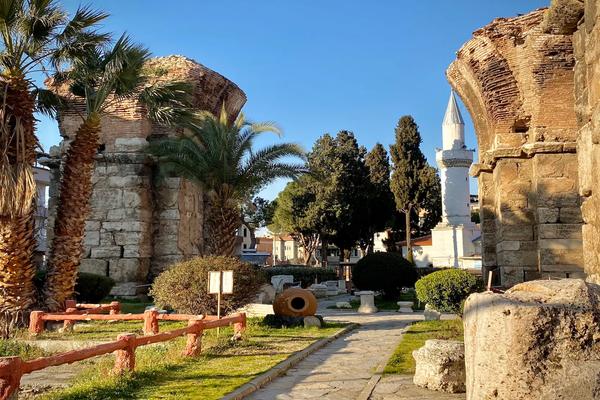
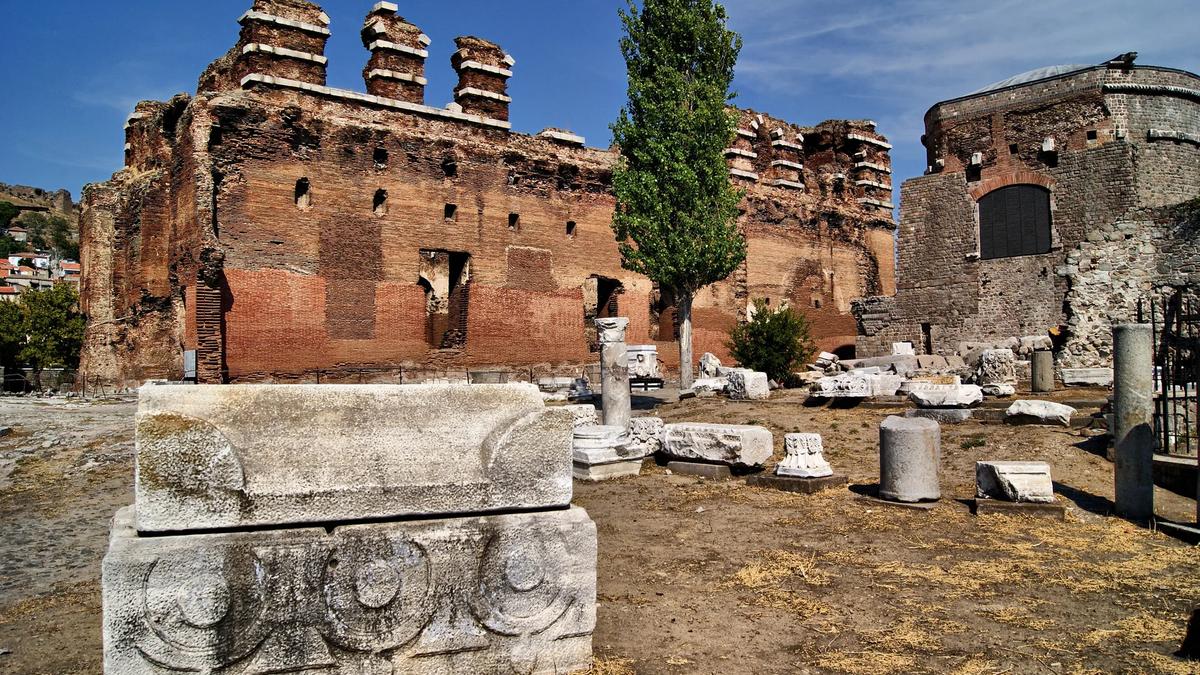
In the lower town stands the Red Basilica (in Turkish, Kızıl Avlu, the Red Courtyard), a huge temple of red brick built in the 2nd century AD, probably under Emperor Hadrian, for Egyptian gods such as Isis and Serapis. It is one of the largest Roman buildings still standing in the Greek world, and its walled precinct, 270 metres long, was built over the river, which still flows through tunnels beneath it. In the 5th century a Christian church, dedicated to St John, was built inside the shell of the burned-out temple. One of its two round side towers is still used as a small mosque.
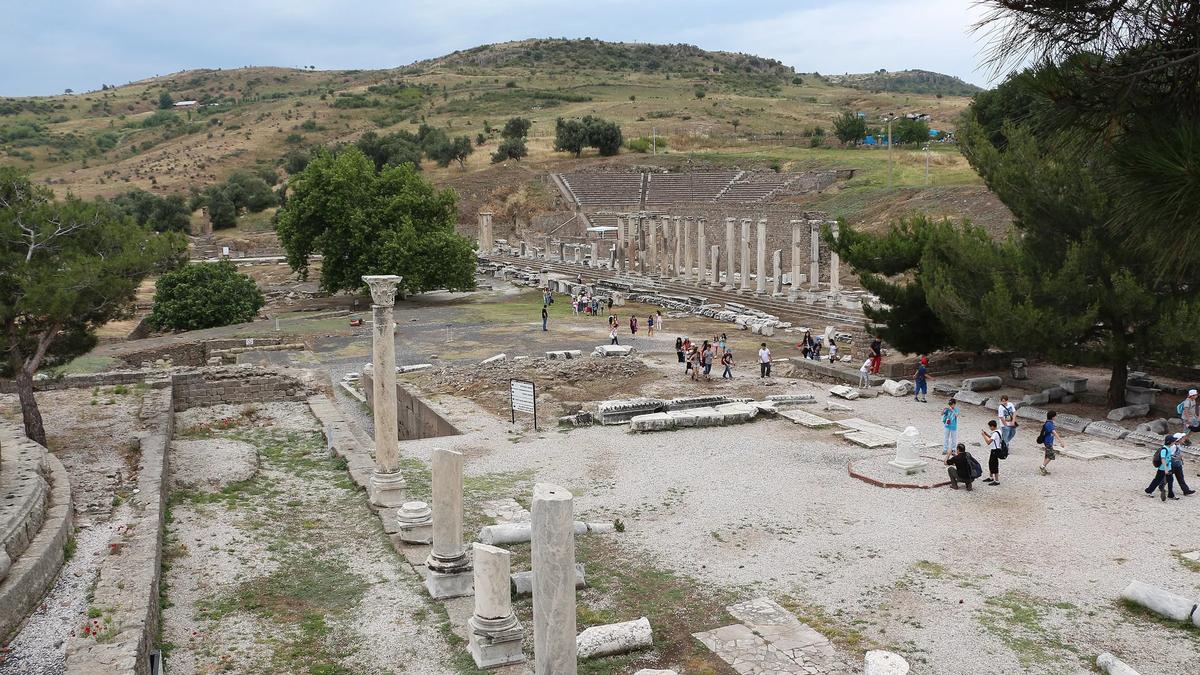
The Asclepion, the healing sanctuary linked to one of the theories about "Satan's throne," lies in the valley about 3 km from the acropolis and is visited as a separate stop. You walk in along the colonnaded Sacred Way and see the sacred spring, which still flows, a small theatre, the round treatment building and the underground passage that led to it. Galen, the most famous doctor of the Roman Empire, trained and worked here.
Visiting Pergamon
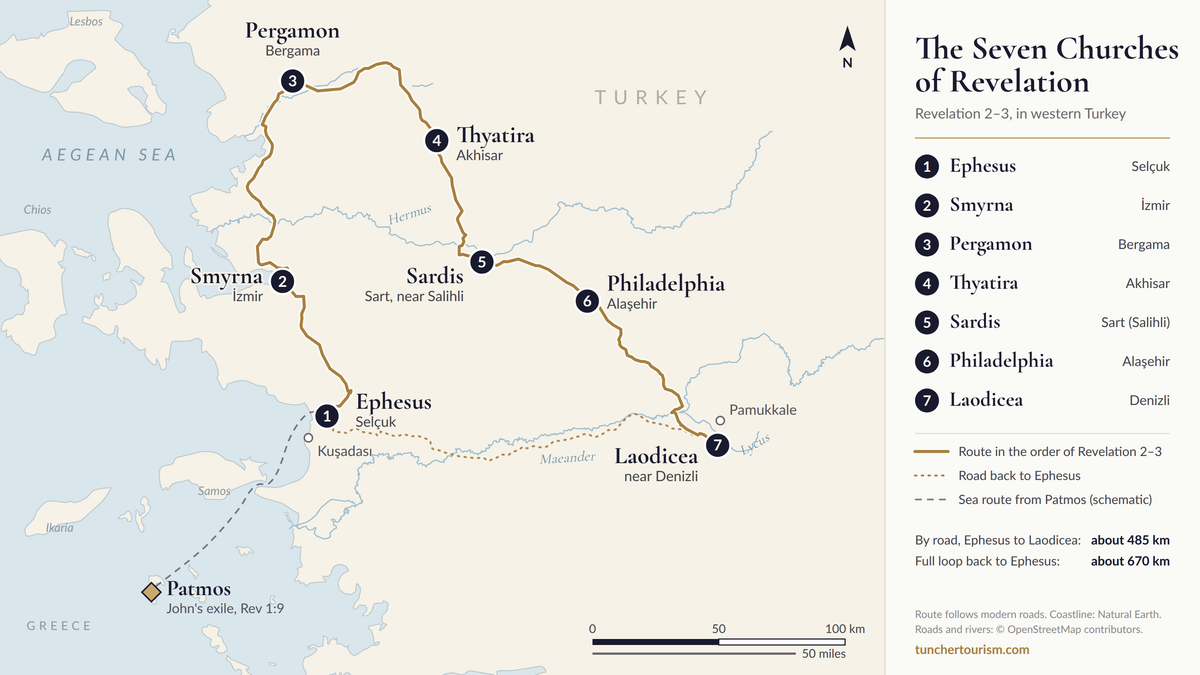
Pergamon is the third city in Revelation's order, after Ephesus and Smyrna, and the northernmost of the seven. Bergama is about 115 km (70 miles) and 1.5 hours by road from central Izmir. Our map of the seven churches shows where it sits on the route.
The acropolis, the Red Basilica and the Asclepion are three separate sites in and around the town. The acropolis and the Red Basilica take the better part of a day to see properly, which is why we cover Pergamon on an overnight route rather than a day trip. Our overnight pilgrimage tour includes both, alongside Smyrna and the House of the Virgin Mary.
To add Thyatira and Sardis, take the three-day pilgrimage. To see all seven churches, our Seven Churches tour from Kuşadası takes four days, with Pergamon and Thyatira on the second day; there is also a version starting in Izmir.
Frequently Asked Questions
What is "Satan's throne" in Revelation 2:13?
The strongest case ties it to Pergamon's status as the first center of the Roman imperial cult in the province of Asia: the city's civic identity was built around emperor worship, the loyalty a Christian could not give. Two other theories point to the Great Altar on the acropolis and to the Asclepion's serpent-god sanctuary. No single theory has full scholarly agreement.
Where is Satan's throne today?
The city is Bergama in western Turkey, where Pergamon's acropolis is reached today by cable car. If the question means the Great Altar, one of the three theories behind the phrase, its frieze is in the Pergamonmuseum in Berlin, which reopens on 4 June 2027 after renovation. The altar's foundation is still on the acropolis.
Why is Pergamon called Satan's seat?
"Satan's seat" is how the King James Version translates Revelation 2:13. The Greek word is thronos, which most modern Bibles translate as "throne," so "Satan's seat" and "Satan's throne" refer to the same verse and the same city.
Is the Pergamon Altar in Berlin real?
Yes. The frieze panels are the original marble carvings from Pergamon's acropolis, excavated between 1878 and 1886. Much of the columned front and staircase around them was rebuilt in modern times, and the altar's stone foundation is still on site in Bergama.
When does the Pergamon Museum in Berlin reopen?
On 4 June 2027, according to the Berlin State Museums. The altar hall has been closed since 2014 and the whole museum since October 2023. The reopening includes the Pergamon Altar; the south wing is expected to stay closed until 2037.
What was the Pergamon Altar used for?
It was a monumental setting for sacrifice. On the upper platform, surrounded by colonnades, stood a smaller fire altar where offerings were made, probably to Zeus and Athena. Only fragments of its dedication survive, so scholars are not certain which gods it honoured or exactly what was offered.
Where is the church of Pergamon located today?
The church addressed in Revelation 2:12-17 met in ancient Pergamon, now the town of Bergama in Izmir province, western Turkey. Its acropolis, with the Temple of Trajan, the library terraces and one of the steepest ancient theatres ever built, still rises above the modern town.
Does the church of Pergamon exist today?
The first-century congregation does not, and no building used by it has been identified. Christianity lasted in Pergamon for centuries: in the 5th century a church was built inside the Red Basilica, and its ruins can be visited in the lower town.
What did Jesus say to the church in Pergamum?
He praised its members for staying true to his name and not renouncing their faith even when Antipas was killed, then rebuked them for tolerating the teaching of Balaam and of the Nicolaitans, and called them to repent. To the one who is victorious he promised "some of the hidden manna" and a white stone with a new name (Revelation 2:12-17).
Who was Antipas?
Antipas was the Christian in Pergamon whom Revelation calls "my faithful witness, who was put to death in your city," the only martyr named in the seven letters. The Bible gives no further detail. Later tradition makes him bishop of Pergamon and says he was burned inside a bronze bull.
Is Pergamon worth visiting?
Yes, if you can give it most of a day. The acropolis with its theatre and altar terrace, the Red Basilica and the Asclepion are among the most impressive ancient sites in Turkey, and Pergamon has been a UNESCO World Heritage Site since 2014. Bergama is about 190 km (120 miles) by road from Ephesus, by way of Izmir, so it fits best on an overnight or multi-day route.
To continue the trail inland, see the Church of Thyatira. For the previous stop, see the Church of Smyrna. For the full route and planning guidance, see the Seven Churches of Revelation guide.
Visit all Seven Churches with a historian
A four-day private tour of Ephesus, Smyrna, Pergamon, Thyatira, Sardis, Philadelphia and Laodicea, for groups of up to 15.
See the Seven Churches tour →Starting in Izmir? See the tour from Izmir